The babies cry.
Not the soft, storybook kind of cry you’d expect from a quiet nursery, but the sharp, persistent kind that cuts through a quiet house in the middle of the night. The kind that makes you sit up straight, blink at the clock, and realize it’s only 2:13 a.m.
And for a group of Wylie High School sophomores, that cry is part of the lesson.
Welcome to what students casually call the “Baby Class.”
Officially, it’s Child Development, part of Wylie ISD’s Human Services Career Cluster. But around campus, that nickname has stuck. It’s the class where robot babies wake you up, where pregnancy feels heavy, and where students begin to understand the real weight of responsibility.
At the center of it all is someone who once walked these same halls.
A Bulldog Teaching Bulldogs
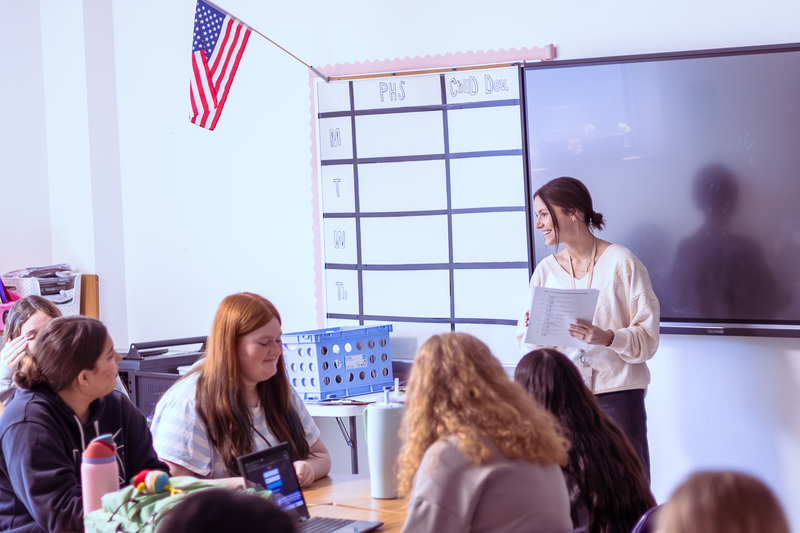
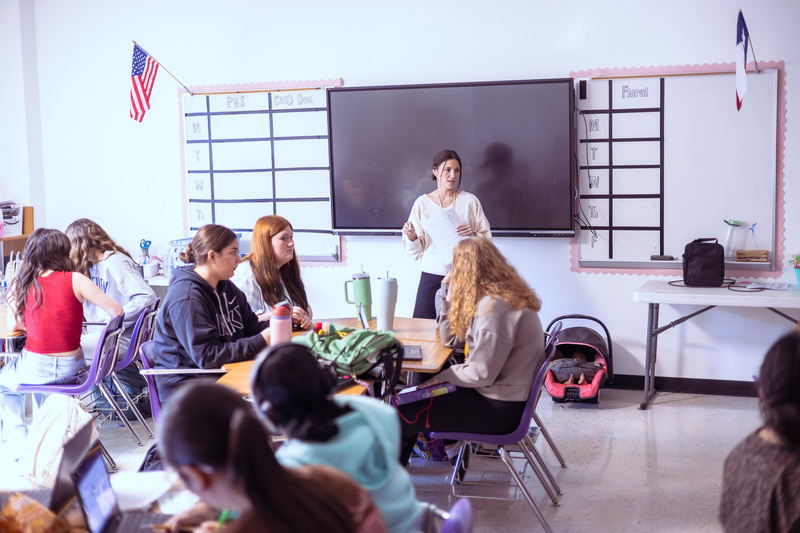
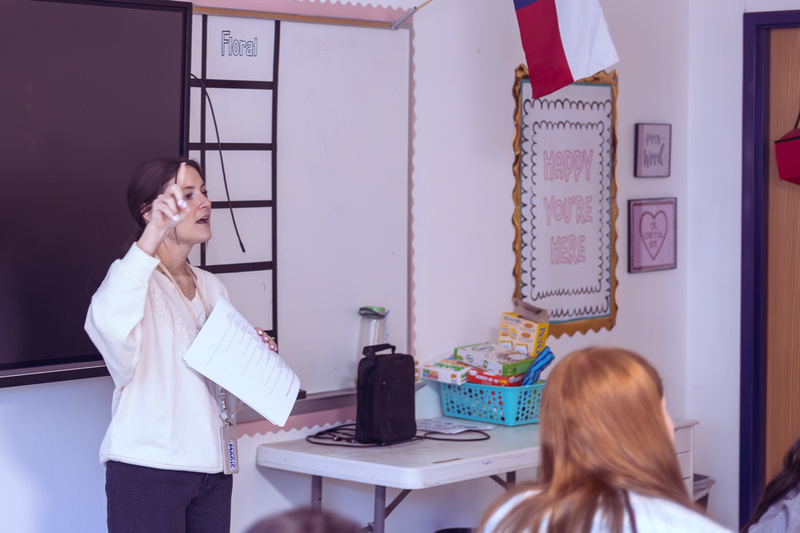
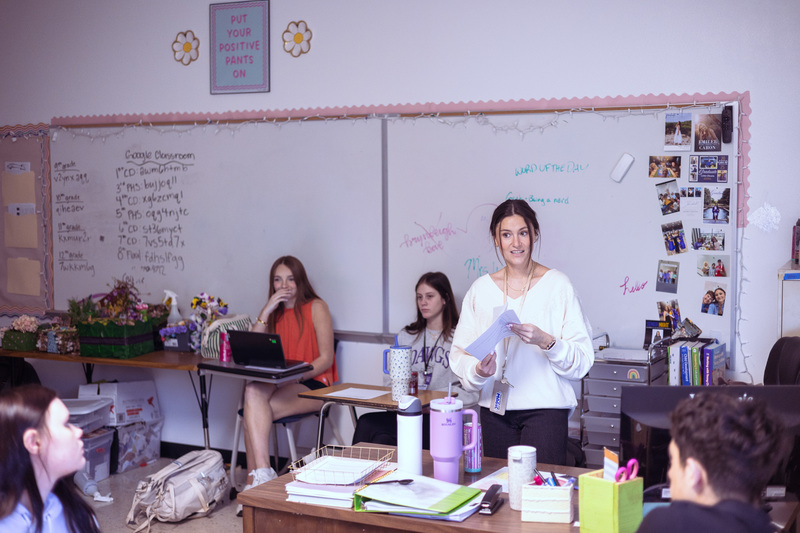
(Teacher Maddie Wood)
Maddie Wood is a Wylie graduate. She’s also a mother of four and spent eight years at home raising her own children before stepping into the classroom.
When she was first assigned to teach Child Development, she didn’t plan it. It simply unfolded that way.
“It felt like a blessing,” she said. “Once I started it, I knew I didn’t want to teach anything else.”
For Wood, Human Services is easy to explain in simple terms.
“If you break it down,” she said, “it’s serving humans. It’s careers that help people in whatever areas of life they need extra support.”
That support might look like teaching, counseling, social work, or working with families in crisis. It might also look like a teenager pacing the living room at midnight with a baby that won’t stop crying.
Meet the Baby
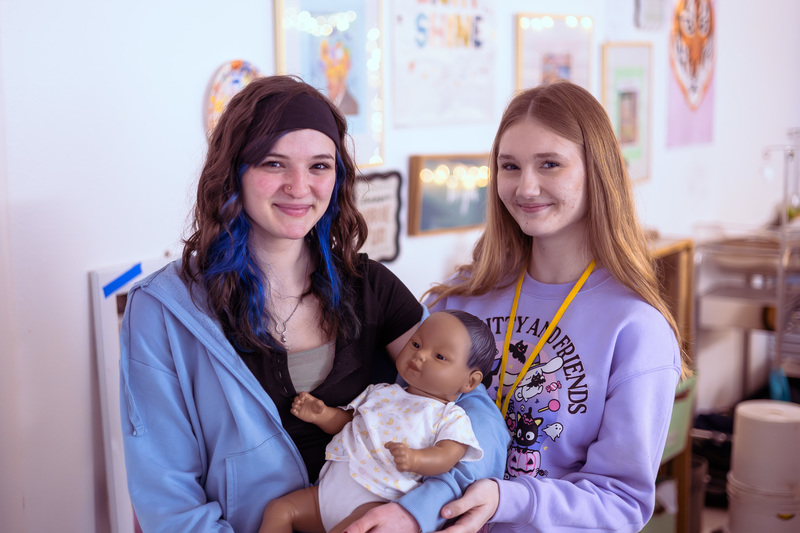
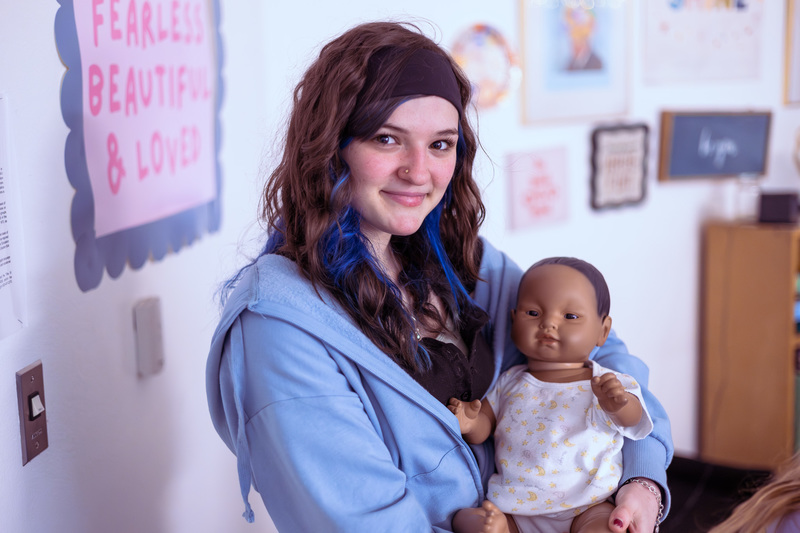
(From Left: Malani Kucirek, "The Baby," Kimberly Shaw, Abigail Robinson)
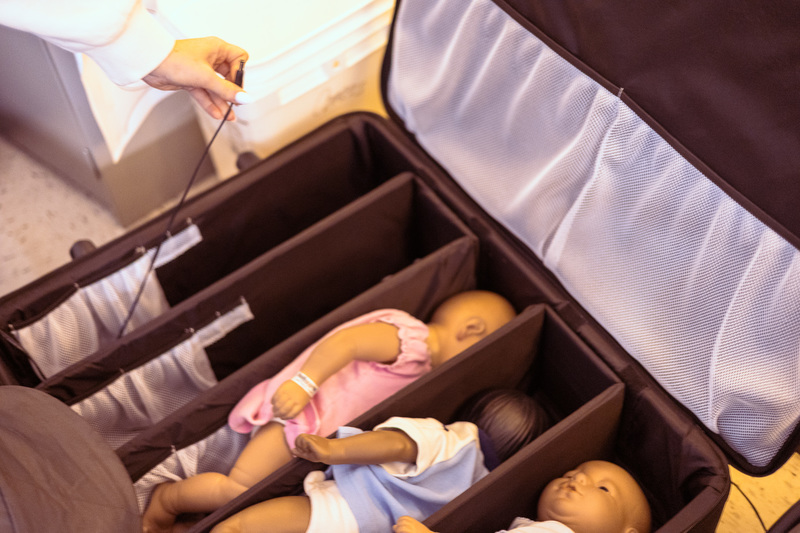
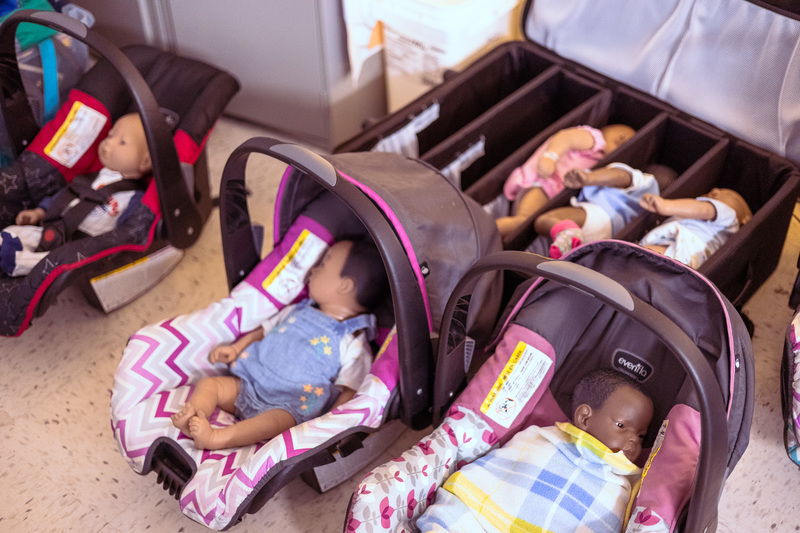
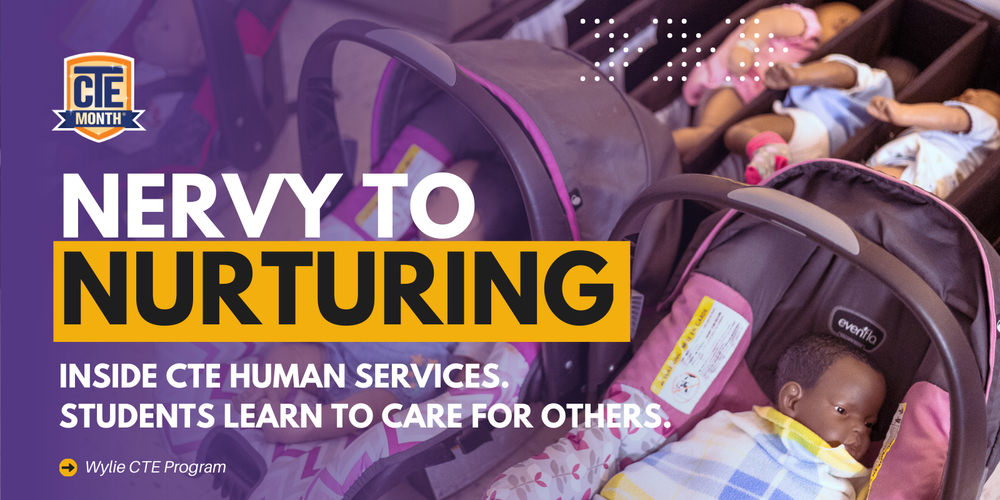
In the corner of Wood’s classroom sits one large case with dividers inside. Open it up, and you’ll find several infant simulators tucked carefully into place, each with its own charging cord and identification.
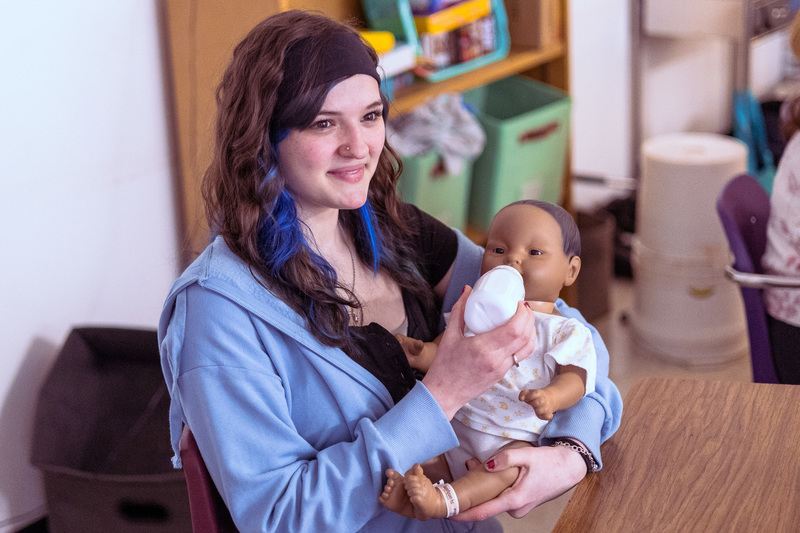
These aren’t dolls. They are RealCare Baby simulators. They cry. They need feeding. They require diaper changes (Zero smell. Same panic). They log every response their assigned “parent” makes.
If ignored too long, they can shut down from neglect.
Students wear a bracelet that tracks their care. When the baby cries, they swipe in, respond, and begin troubleshooting the baby. Is it hungry? Does it need to be rocked? Is it time for a diaper change?
The process mirrors real life more than students expect.
“They can’t tell you what’s wrong,” Wood tells them. “You figure it out.”
For 10th grader Kaidence Dora, taking the baby home for the first time this weekend feels “nervy.”
That was her word. Nervy.
She’ll take home an male baby simulator this weekend. The baby will wake up during the night. It will cry in the car. It will interrupt plans. It will demand attention.
And that’s exactly the point.
Feeling the Weight
("The Belly," Demonstration by Kaidence Dora)
Then there’s “The Belly.”
Officially called a pregnancy simulator, it weighs about 20 pounds and straps onto a student’s torso. Tucked inside is a small mechanism that pushes outward to mimic the sensation of a baby’s feet.
Students laugh when it first goes on. Then they stand up.
The weight shifts their posture. It strains shoulders. It pulls on their lower back. After several minutes, the novelty fades and the reality sets in.
Kaidence wasn’t nervous about demonstrating the belly in front of her classmates. She adjusted the straps and smiled for the camera. But after a few minutes, she admitted it's not too bad at first but you can feel the strain.
It’s one thing to talk about pregnancy. It’s another to feel even a small glimpse of it.
For many students, that physical experience leaves a lasting impression.
Learning the Hard Truths
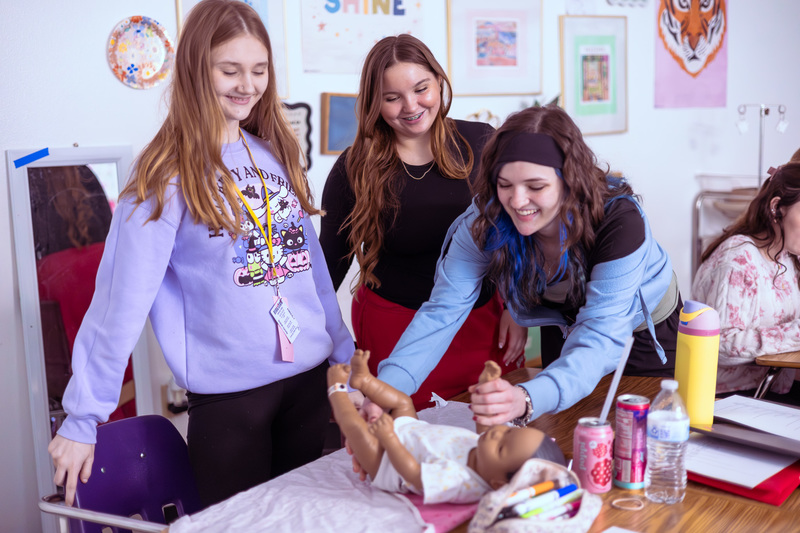
(Kimberly Shaw showing the swaddle)
Child Development is not all swaddling and cute baby names.
Students study pregnancy complications, infant safety, postpartum depression, and developmental milestones. They talk openly about teen parenting, single parenting, and the sacrifices that come with raising a child.
Kimberly Shaw said one of the most impactful moments came during lessons on infant safety.
“This actually happens to babies out there,” she said after learning about suffocation risks and preventable conditions.
The class has made her think about her own future.
“I want to be a good mother someday,” she said simply.
Abigail Robinson, whose mom is a midwife, said the course has made her more mindful.
“I’ve always wanted to be a younger parent,” she said. “But it’s made me very aware of the challenges you really have to face.”
She plans to become an elementary teacher one day. The developmental lessons have changed how she views that goal.
“As a teacher, you don’t always know what’s going on at home,” she said. “Sometimes you’re the only person who can help that child through.”
Malani Kucirek hopes to become a child psychiatrist. For her, the class has shifted perspective.
“Some kids want to talk about everything,” she said. “Some kids don’t talk about anything at all. Knowing how I can help a kid become confident and happy — that matters.”
Even students who may not enter a helping profession walk away with a deeper understanding of what families face.
More Than Baby Class
Child Development is part of a larger Human Services pathway at Wylie High School. Students can begin with Principles of Human Services and continue into Family and Community Services, a course Wood will teach next year.
While Child Development focuses heavily on working with children and understanding growth from pregnancy through early childhood, Family and Community Services expands the lens.
“It’s not just about kids,” Wood explained. “It’s about families and the community as a whole. How do we support them? How do we serve them?”
She is already exploring partnerships with local organizations and nonprofits. Her long-term vision includes practicum opportunities where students can serve in real settings under supervision.
“I can’t wait to see them get fulfilled serving other people,” she said. “Making a difference in someone else’s life while it changes their own.”
Growth You Can See
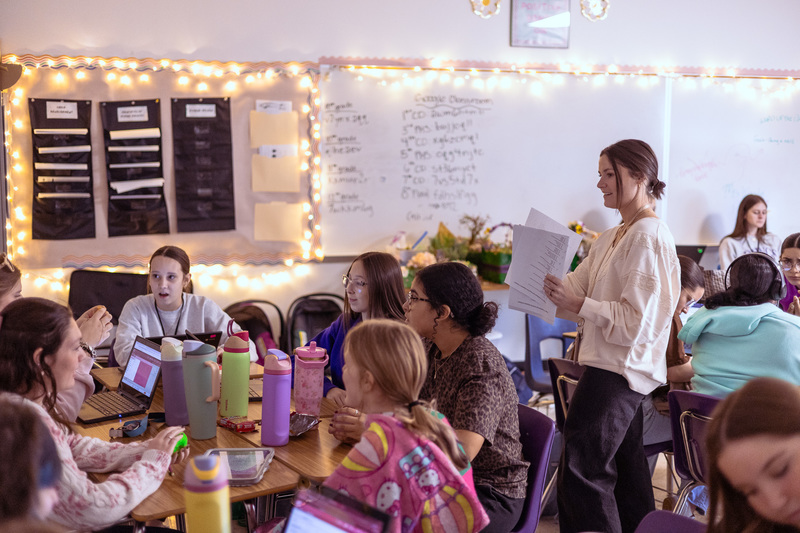
Wood sees growth in ways that don’t show up on a report card.
Growth shows up in small but meaningful ways. Students who once giggled at the idea of parenting begin to grow protective over their assigned baby. A weekend of interrupted sleep leads some to admit they never want to experience teen parenthood. Conversations about mental health and postpartum depression shift from awkward to thoughtful and respectful.
Malani reflected on taking the baby home.
“I saw myself getting up in the middle of the night,” she said. “Going out of my way to make a sacrifice. Just knowing I can do that means something.”
That awareness is powerful. It builds empathy. It builds responsibility.
It builds character.
Advice for Incoming Students
What would these sophomores tell an eighth grader considering the class?
“Expect to learn a lot,” Malani said. “Come with an open mind.”
Kimberly added that students should expect both meaningful and difficult lessons.
“You learn fun things like swaddling,” she said, “but you also learn about real things that happen.”
Abigail agreed.
“It makes you mindful,” she said.
Preparing for Real Life
For Wood, that’s what makes Human Services so important.
“To me, this is as real-world important as it gets,” she said. “Even if you don’t work with kids, you were a kid. It’s still relevant.”
The skills students develop in this pathway stretch far beyond parenting. Communication. Leadership. Empathy. Professionalism. The ability to serve others.
And in a world that often encourages independence above all else, this class reminds students that caring for someone else requires intention.
It requires patience.
It requires sacrifice.
In a classroom with one large case of charging babies, a pregnancy simulator called “The Belly,” and honest conversations about life, Wylie students are learning something deeper than content standards.
They’re learning what it means to show up for someone who depends on you.
They’re learning how to serve.
And in Wylie ISD, where preparing students for life beyond graduation is more than a slogan, that feels like something worth celebrating.
Because when teenagers choose to care, to grow, and to think beyond themselves, it reminds us all why it’s great to be a Wylie Bulldog.