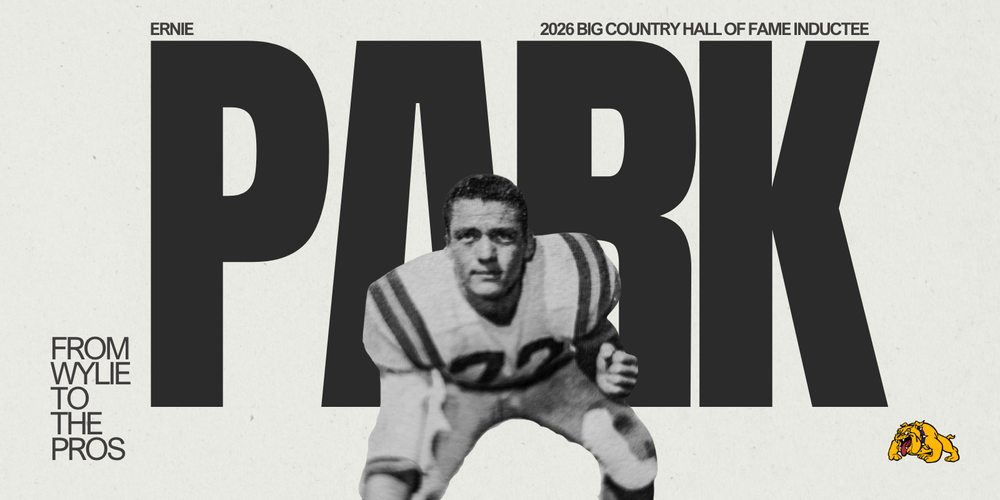
Wylie graduate Ernie Park will be inducted into the Big Country Athletic Hall of Fame on April 20
By Greg Jaklewicz
Going to the banquet?
What: 25th Big Country Athletic Hall of Fame induction banquet
When: 6:30 p.m. April 20
Where: Abilene Convention Center
Tickets: $80 each. Go to bigcountryhalloffame.org or call 325-704-1759
A fairytale beginning
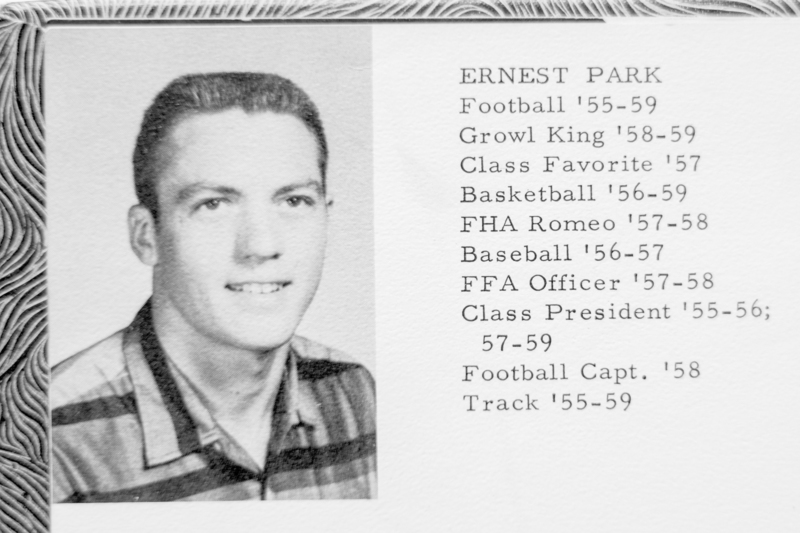
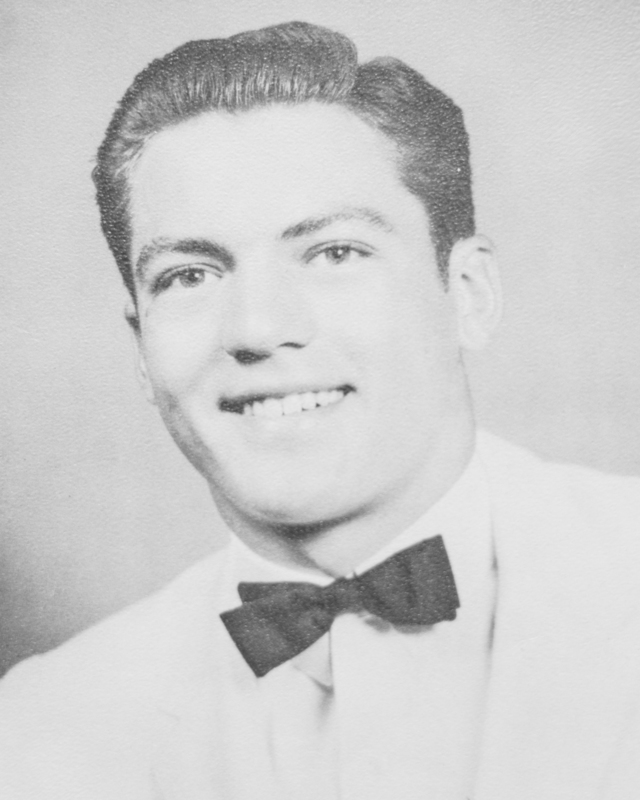 (Ernie Park, Class of 1959, Growl King)
There is a bit of a fairytale to Ernie Park’s life story.
Imagine, a strapping young man from West Texas, the son of a farmer and craftsman, taking his bride, a girl from Haskell and the daughter of school teachers, to San Diego for their honeymoon.
It’s 1963.
The Beach Boys that year surfed to their first No. 1 song. Martin Luther King Jr. gave his “I have dream” speech in Washington, D.C.
This was 63 years ago.
After the honeymoon, the couple stayed in sunny SoCal so that the husband could start his new job - offensive lineman for the local pro football team, the Chargers.
Park would play in the fledgling American Football League for six seasons at San Diego, Miami, Denver, and Cincinnati. He was signed by but never played for Oakland.
To many aspiring athletes, a dream come true.
To make the story more charming, Park shared the adventure with his No. 1 fan.
“I married the princess,” he said, pointing to a photo of himself with the former June Bell that’s on the wall of their home north of Clyde. Not an athlete herself, she grew to love the football life.
A 1959 graduate of Wylie High School, Park on April 20 will be inducted into the Big Country Athletic Hall of Fame, which is celebrating its 25th anniversary. He will join the likes of former Wylie standout state champion coaches Hugh Sandifer and Stanley Whisenhunt, and state champion athletes Rickey Parris and Peyton Little, among others.
“It is quite an honor,” Park said.
Big Country boy
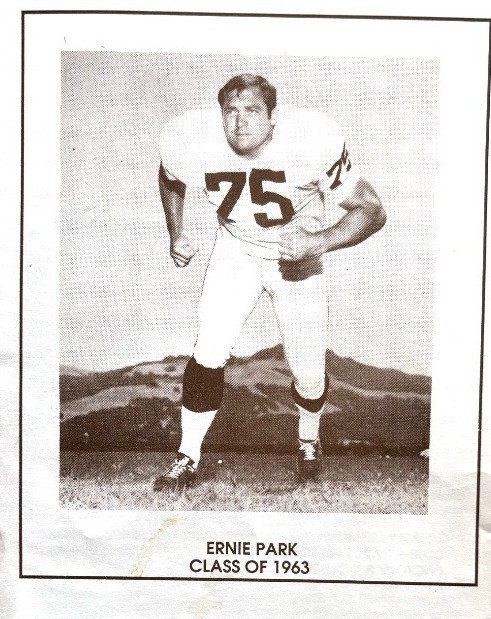
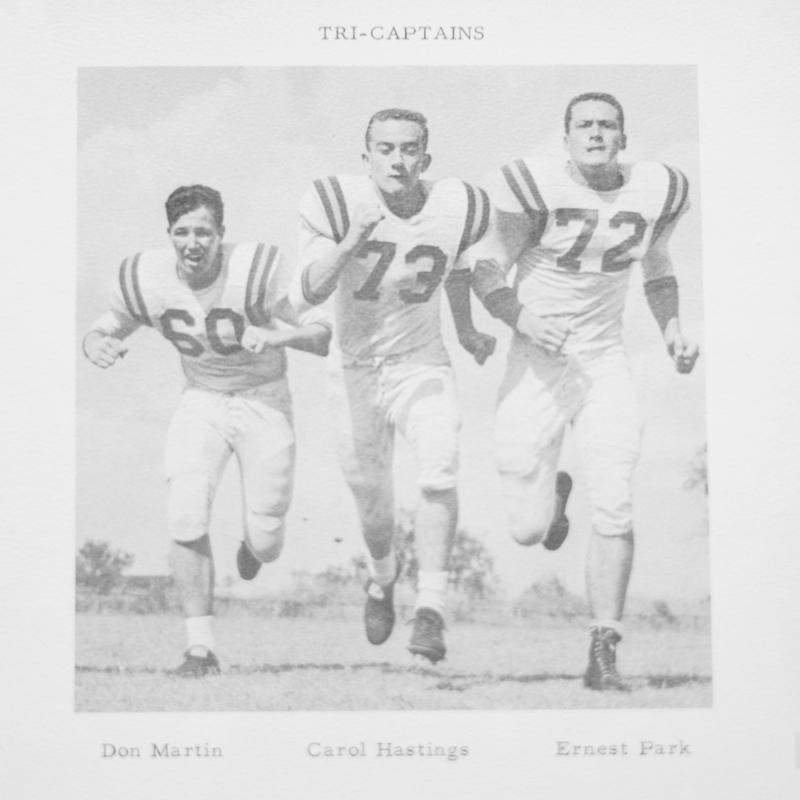
(Ernie at McMurry)
Park was born in San Angelo. His family bounced around a bit, living a year in Portales, N.M., before finally settling on land purchased in the Wylie school district.
It was in Cross Plains, however, that, as a young boy, he saw his first track meet. Enthralled, young Ernie decided athletics were for him. He even built a track setup at home.
“I was in awe. I saw people high jumping and running races. It took,” he said of the first spark to become an athlete.
His dad had athlete’s skills and so did his older brother, who never competed in sports.
Park may be one of Wylie’s first football standouts, but he insists that teammate Joe Rex Schulle was the best Bulldog of his day. Toward the end of their junior year, Texas Christian football coach Abe Martin pitched a deal that both Wylie players become Horned Frogs upon graduation. It was Schulle they really wanted, Park said, smiling.
“I never played with a better athlete,” Park said of his teammate and close friend. They’d hop on Schulle’s Cushion motorcycle and look for good places to hunt and fish.
“Usually illegal … we’d sneak into someone’s pond,” he said, smiling. “We were closer than brothers.”
On the varsity, Park was on the line while Schulle was a running back and quarterback.
“We had pretty good teams,” Park recalled. Both also ran track..
However, Schulle sustained a freak track injury late in his junior year and although he still was a good athlete the next year, he wasn’t the same standout. Park said TCU never followed up. Nor any other school.
Wylie track athletes worked out at McMurry - the school did not have a real track - and that’s where Park got to know the Indians staff. The ead coaches included a recent McMurry graduate, Grant Teaff. The athletic director was P.E. Shotwell, for whom the Abilene ISD stadium is named.
“They came to me and said, ‘We think you’d do a good job at McMurry,” Park said.
Park had been interested in Hardin-Simmons. HSU, however, did not pursue the all-district player from Wylie.
Park remembered that when he finally made his decision in late May 1959, McMurry’s spring term had ended. There was one car in the parking lot and, fortunately, it belonged to Shotwell.
“I wondered if we’d ever see you,” he chided the burly Bulldog.
“The good Lord was looking after me,” Park said.
While McMurry was no football powerhouse during Park’s tenure, he developed into an honorable mention LIttle All-American in 1962, and in 1987 was inducted into the university’s Hall of Honor.
“Greatest thing that ever happened to me,” he said of attending McMurry. He was the first in his family to go to college.
The 1965 graduate majored in athletics - thinking he’d be a coach - and minored in speech.
“I liked to talk,”:he said.
Those skills would come in handy after his retirement from football. He coached and taught.
He didn’t want to farm?
“No. I didn’t want to get on a plow,” he said.
The pros know
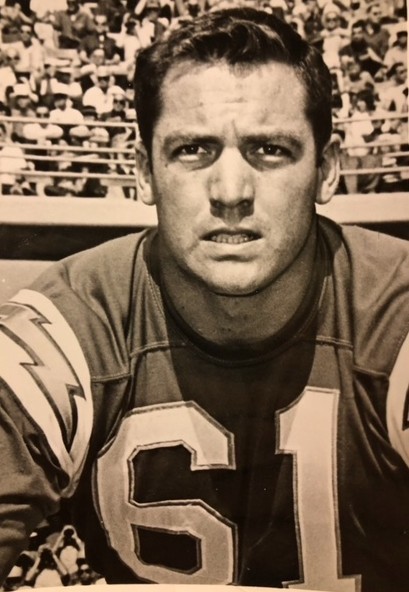 (Park with Chargers)
Park was drafted by both AFL and the National Football League teams, though only in the late rounds (230th player selected in the 17th round, by the NFL Dallas Cowboys).
How he joined the Chargers as a 19th round pick is a quirk of fate.
He still had one college season left.
It was July 1963 and Park was gearing up for his fifth year at McMurry when he and four other players were declared ineligible. The other schools in their conference pointed to a game when Park was a redshirt freshman. The bench was cleared in a blow-out game. The reporter covering the game listed all the younger players who got into the game.
That, the other conference schools insisted, counted as eligibility. So, without that final year of competition, Park’s athletic future seemed over, although he would be allowed to finish school on scholarship and assist the team as a student-coach.
That is, until Sid Gillman, coach of the Chargers, telephoned Park and told him to get on a plane to San Diego. Teaff had called him and the Cowboys with the update on Park’s status.
“I never heard from the Cowboys,” Park said.
Gillman got to the point.
“He said, ‘Park, I heard about your misfortune but I’ve got an airplane ticket waiting at the airport. We want your butt out here. We’re fixing to start summer camp,’” Park said, imitating Gillman’s gruff voice.
He’d arrive with other rookies, including a sure-handed receiver named Lance Allworth.
They rode together to Rough Acres, a nice dude ranch that the Chargers used as a training camp east of the city.
But there was a problem.
Park had been working two jobs that summer, including some time on an oil rig, and his playing weight had dropped to 214 pounds in the West Texas heat. That is grossly underweight for an offensive lineman. He played at 235 pounds at McMurry.
The linemen at camp eyeballed him curiously, he said, laughing.
In his favor, however, were his quick feet. Gillman and his staff liked that, and the young player was signed to a two-year contract after one workout. He believes he was paid $12,000 his first year.
Park then hit the training table and beefed up to more than 250 pounds.
“I was quick and when I got my weight up, I could compete,” he said.
Ernie and June, who met at McMurry, were engaged at the time. He soon returned to Texas and they married. He returned to the West Coast with a bride.
“It was the best honeymoon I could ever have,” she said.
Park agreed.
“It was a charmed life,” he said, joining her laughter.
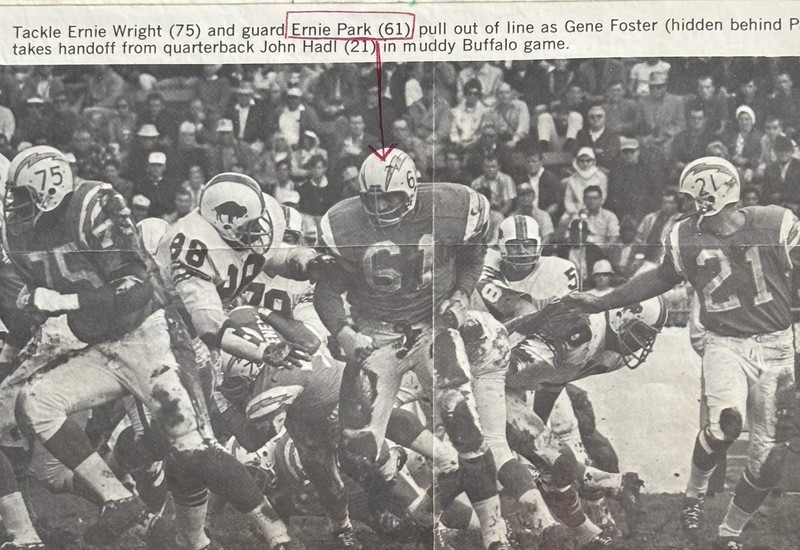
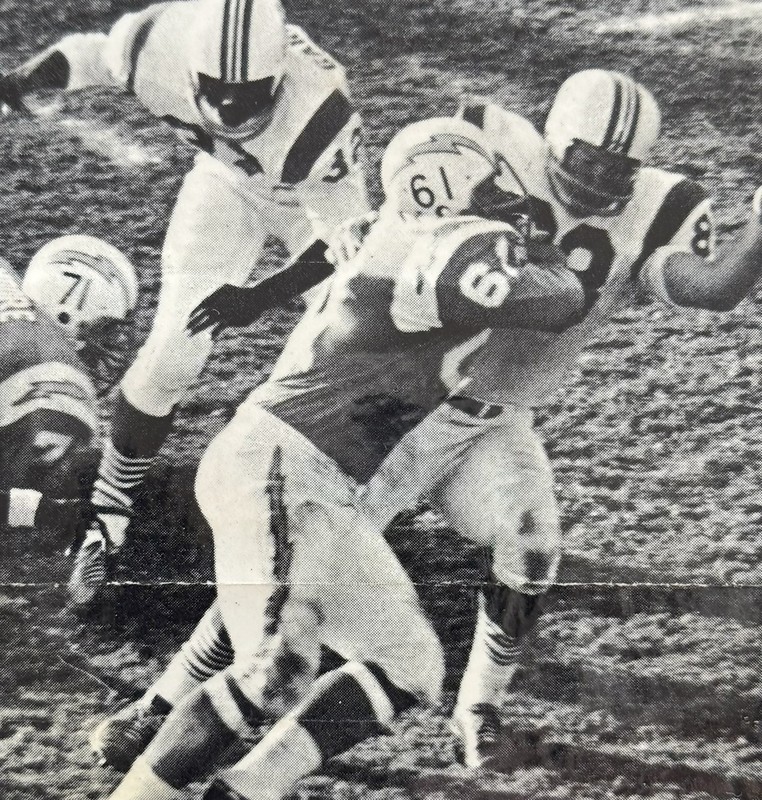 (Park 61 Blocking)
All charged up
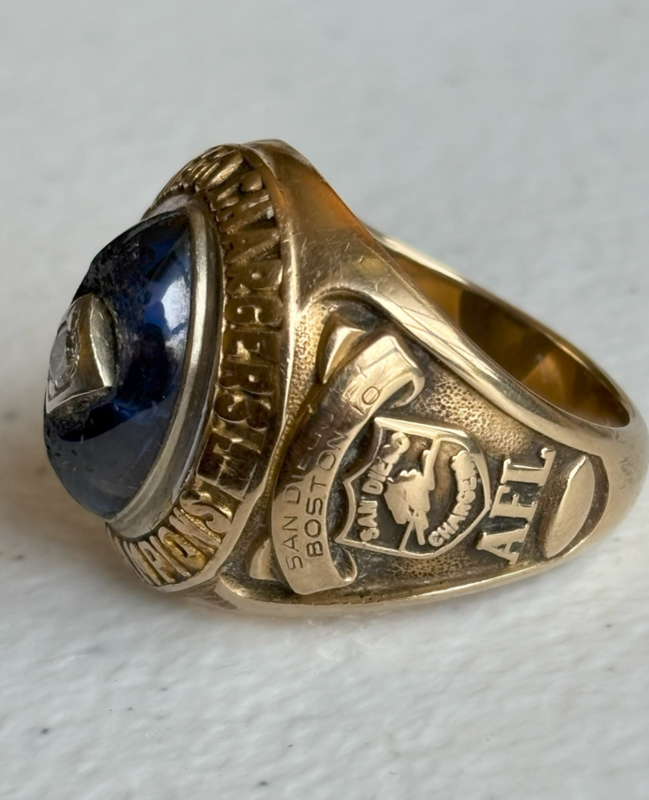
Park played in seven games and earned a championship ring when San Diego routed Buffalo 51-10 in the AFC title game.
In a matter of months, Ernie Park went from ineligible player to champion. From playing on campus to Balboa Stadium before 34,000 fans.
“San Diego was such a good town. The people, it’s got the military base, the businesses. We got free” things, he said.
It was in San Diego that Park had to confront his military obligation. The Vietnam War was escalating.
He took a physical in Los Angeles after playing a game and high blood protein was noted. He was held overnight, ate a double order of steak and eggs and was tested again. So-so results. Park was notified that he would be tested again in the offseason.
The couple returned to Abilene, where they found out that June was pregnant. At the time, a married man with children or expecting one could get a deferment.. As the war raged on, Park recalled, having one child wasn’t a set exemption.
“We stayed one child ahead of them,” Park said. The couple would have two boys - Eric and Elliott - and a girl - Leigh.
In short, Park did not have to serve.
“I had older kinfolk who served in the military, and some of them didn’t make it back. And friends and neighbors. I felt it was a duty. I felt bad about not being able to serve my country. But also felt relieved,” he said of a war that ended after his playing days were over.. “I said, ‘Lord, you saved me.’”
A Dolphin, Bronco, Bengal (and sort of a Raider)
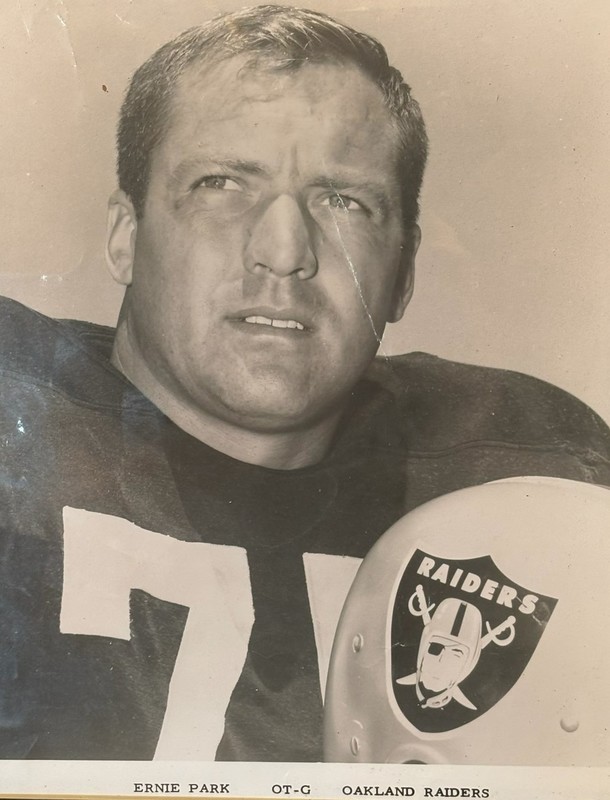 (Ernie with Oakland Raiders)
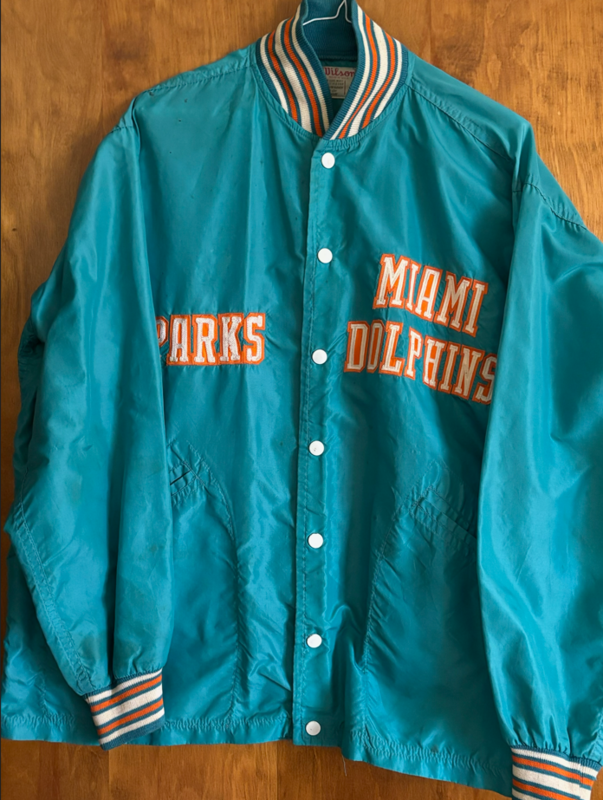
In 1966, he joined the Dolphins, a brand new AFL team in south Florida. San Diego did not protect him in the expansion - he mused that maybe it was because of his uncertain military status - and the Dolphins picked him up. He started 11 of 14 games in 1966 at left guard.
Miami today honors him as an original Dolphin.
June Park said she loved San Diego, and they were fond of Denver, their next stop. Miami?
“I didn’t like Miami,” she said, shaking her head. “Different people, different environment. It felt foreign. I didn’t enjoy it like I did San Diego.
“When I moved out there, I took 100 percent interest in the team.”
Park was traded to Denver, playing in all 14 games while starting nine.
He missed the 1968 season after being acquired by Oakland but never activated for Al Davis’ team.
“(He) called me after the season and apologized. I tell you, Al Davis was a player’s coach. He almost had tears in his eyes. He said, ‘Park, we’ll make it up to you.’ “
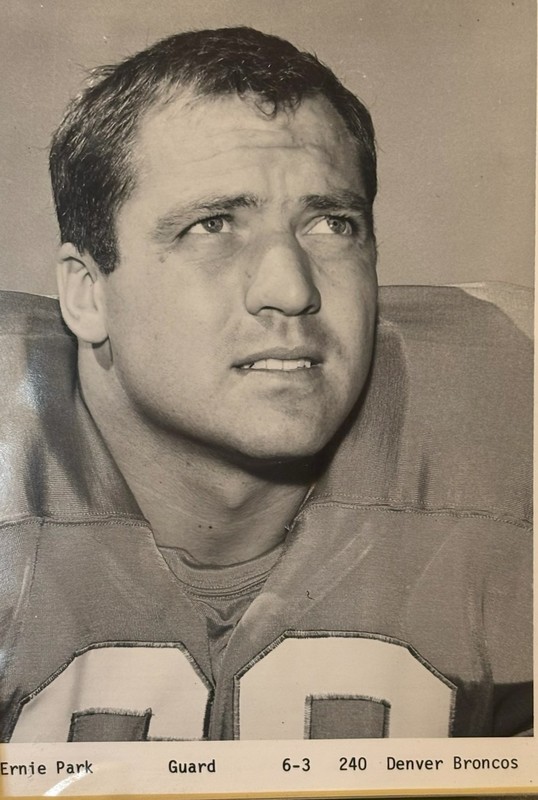
He then was traded to Cincinnati, which had joined the league the year before. His final pro season would be in 1969, starting in eight of 11 games for the Bengals.
Cincinnati, under legendary coach Paul Brown, finished 4-11-1. Oakland was 12-1-1.
Oakland’s personnel manager called him in June 1970, wanting to make good on the year that he lost.
Park thought about it because he liked Davis. However, he had launched into retirement, taking a job teaching and coaching at Abilene High. June was an elementary school teacher.
“I told him that I couldn’t do it,” he said.
June said she didn’t know about the offer, “or I would’ve told him to go back.. She laughed. “Because I had to go work now.”
He does have one memory from Oakland - getting hit in the head with a half-full beer can just after he took off his helmet while leaving the small stadium in what he called “the rough part of Oakland.”
“It was a lady, I’m pretty sure,:” he said.
He had to get a few stitches.
Moving on
For his career, Ernie Park made 36 starts and played in 74 games as a pro.
Not bad for an ol’ Wylie Bulldog.
At age 29, he walked away from football. The family had grown to four, and eventually there was more money to be made back in Texas than as a pro football player. Park can only shake his head at what players earn today, even as backups, and that most guards and tackles today would have a good 75 pounds on him at his biggest.
After working in the Abilene ISD, they moved to Clyde.
June taught for 23 years there.
Her husband taught and coached at the middle school level for the Clyde district, as well as working in both the oilfield and the heating/air-conditioning business with his brother-in-law.
“It’s made for a good retirement,” he said.
Reflecting on his football days and many adventures, Ernie Park is content. His days at Wylie and McMurry are treasured.
“I enjoyed the game. I had a little pride. I’d stick my chest out a little. My mother and dad would brag on me,” he said. “I felt like they were accomplishments.
Now he’s joining the areawide hall of game.
“It’s icing on the cake,” he said.
Park paused.
“If they don't recognize Joe Rex Schulle,” he said, “I’m going to get up there and tell them how great he was.”
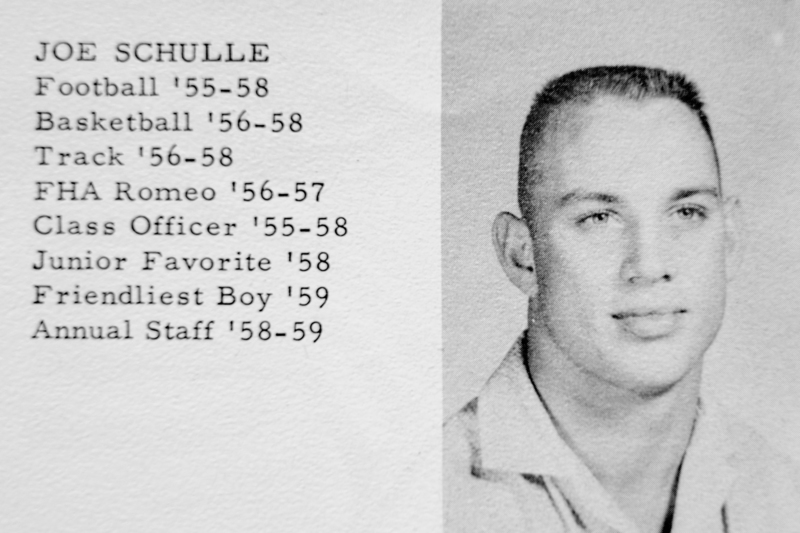 (Joe Schulle, Class of 1959)
Credit where credit is due
Ernest Carol Park believes that he married the best woman he could.
He believes Schulle was the better athlete among two buddies.
And he believes that his father, whom he reverently calls “a praying man,” made a difference in his life. His father also was known as a pretty good preacher.
He’d get up at 4 a.m. on the farm, start a fire in the stove, pour his coffee and read the Bible. And he’d pray, Park said. Aloud, maybe thinking God could hear him better. He’d pray for rain or … for his son.
“Lord, I plead with you to look after that son of mine.. He’s reckless and he needs your guiding hand upon him. He’s a precious kid … “
“That sort of thing,”: Park recalled, slowly. “I’m going to tell you something, the good Lord answered that prayer. I got into a lot of scrapes where it could’ve gone south.
“He looked after me. I’ve had a fine life.”
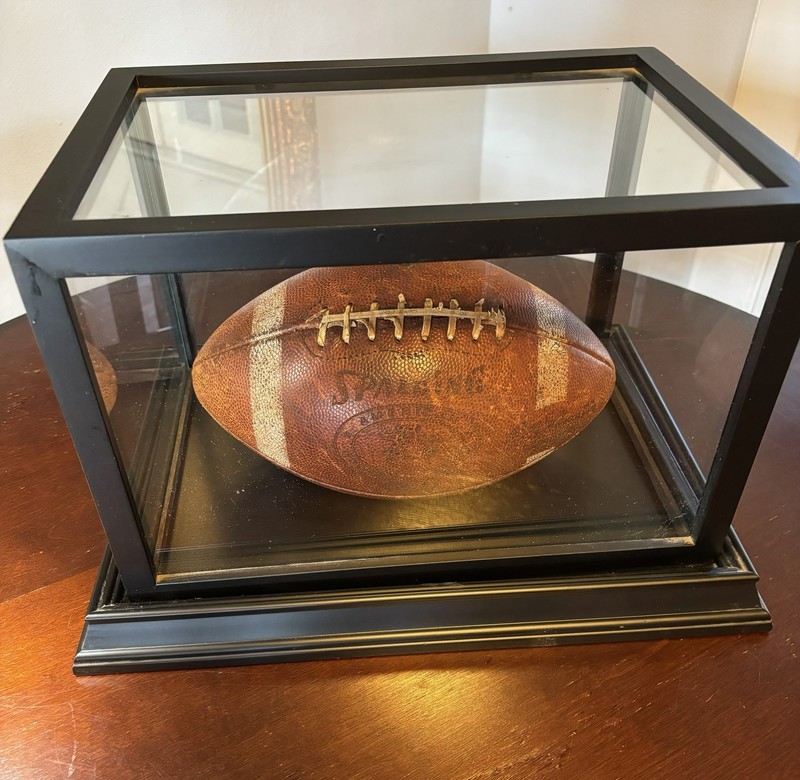
(Ernie Park's Last Game Ball)