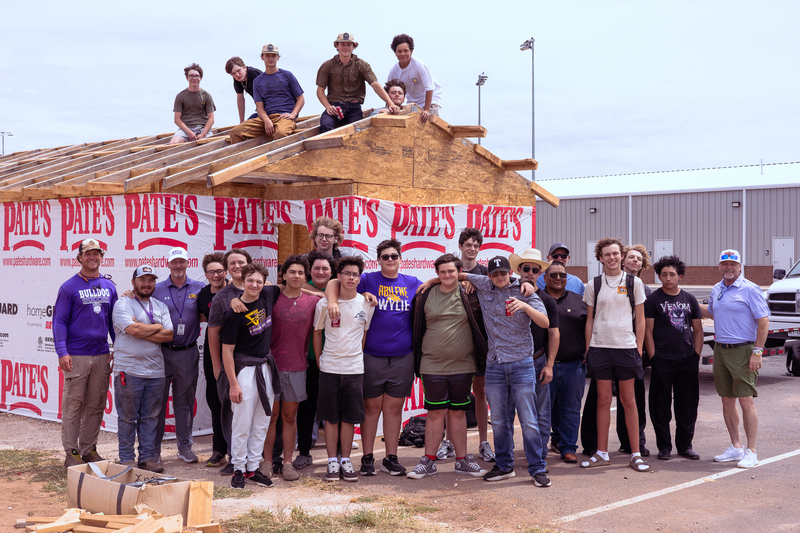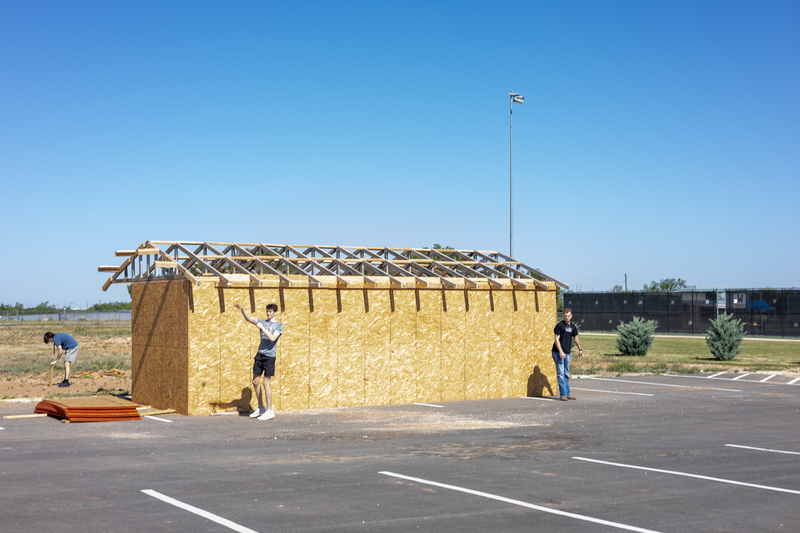
Wylie construction and electrical students put classroom skills to work on a tiny home that will give families a free place to stay during a medical crisis.
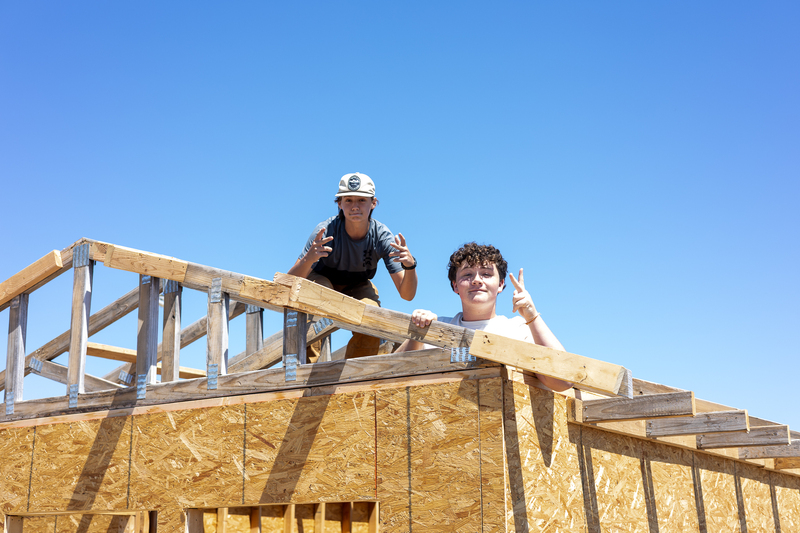
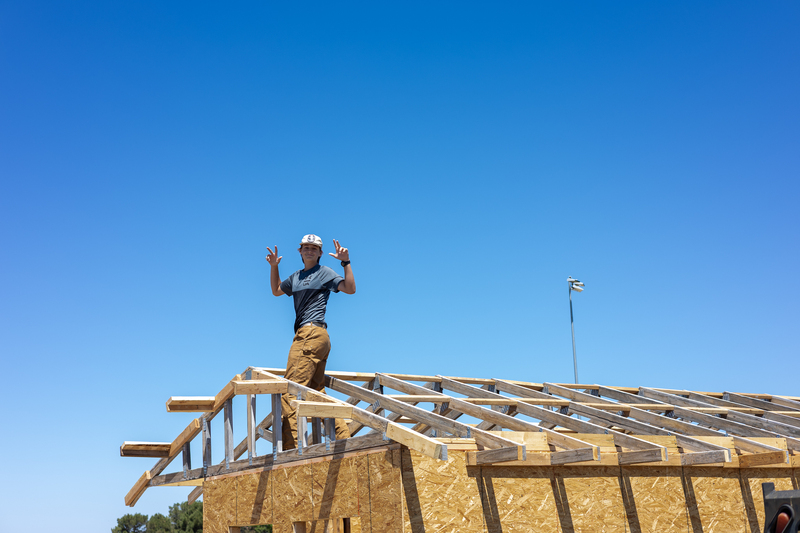
From the roof of a tiny house taking shape beside Wylie High School, Nate Shaffer could already picture its future.
He had spent weeks lifting lumber, installing sheathing and learning the details hidden inside a finished wall. The roof had become his favorite part, not simply because he enjoyed working high above the ground, but because it was something lasting.
One day, a family facing one of life’s hardest seasons would walk through the door below him. When asked what he hoped they would feel, Shaffer did not hesitate.
“Comfort and safety.”
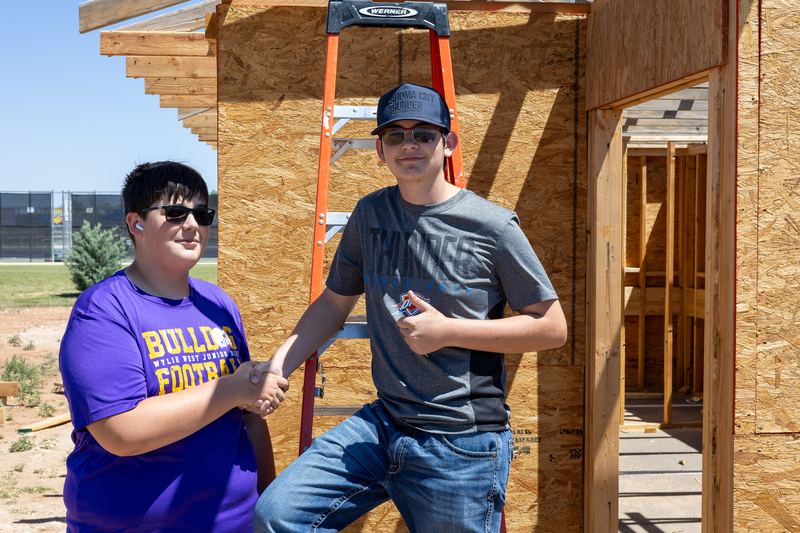
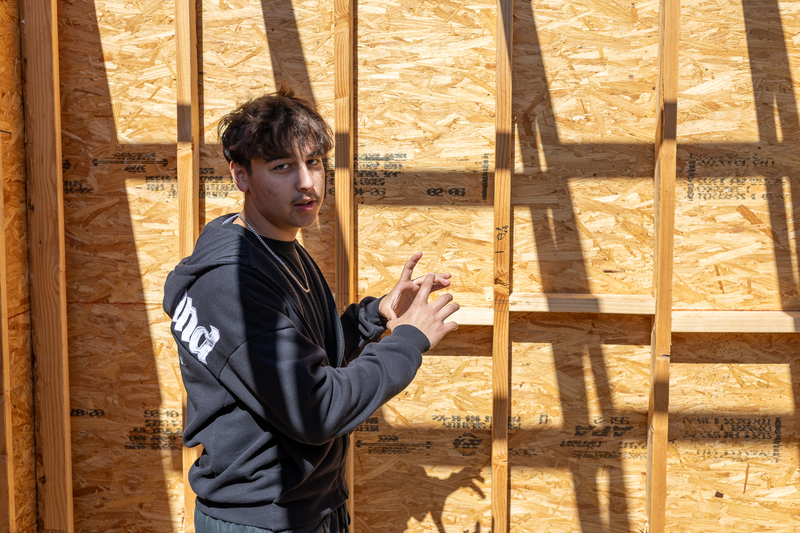
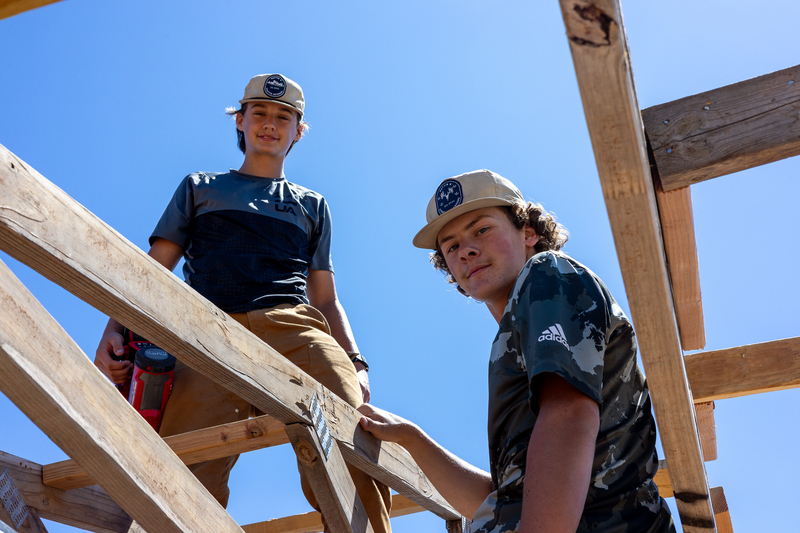 (L-R, Nat Shaffer and Davis Wylie)
A roof with a future
Wylie construction and electrical students built the tiny house for Houses for Healing, an Abilene nonprofit that provides free temporary lodging for people receiving medical treatment away from home and for families supporting hospitalized loved ones.
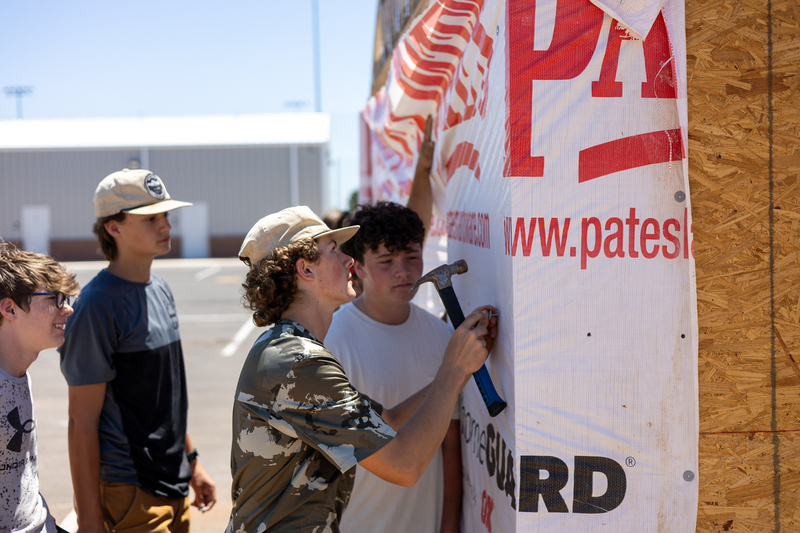
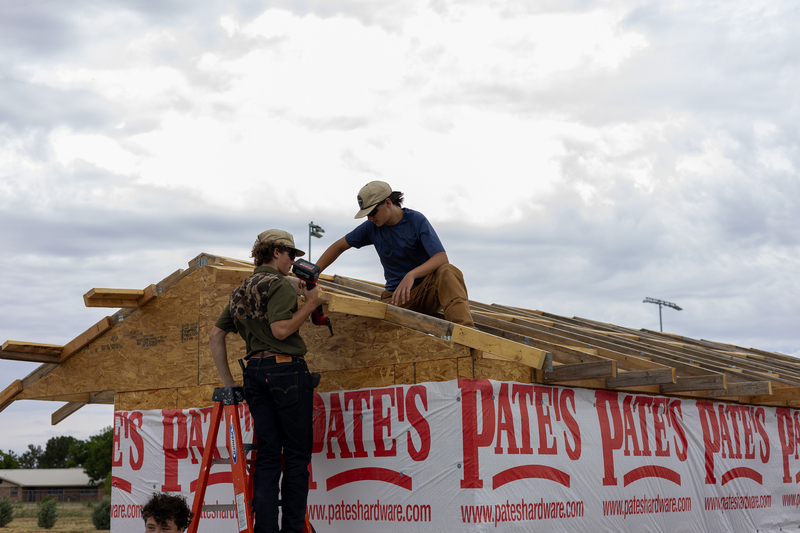
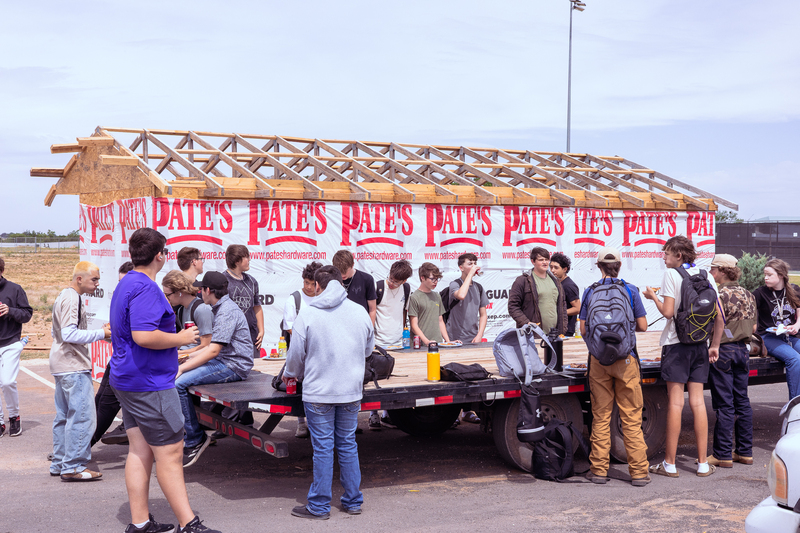
The project gave the students a client, a set of plans and work that had to fit together correctly. Ben Hudman’s construction classes handled the framing, sheathing and house wrap. Clay Vaughn’s electrical students studied the plans, marked outlets and switches, and mapped the circuits that would eventually bring the home to life.
Each student brought a different level of experience to the jobsite. Shaffer spent much of his time on the roof and helped install sheathing inside the structure. The amount of lumber and the braces hidden within the walls gave him a new appreciation for what goes into a completed house.
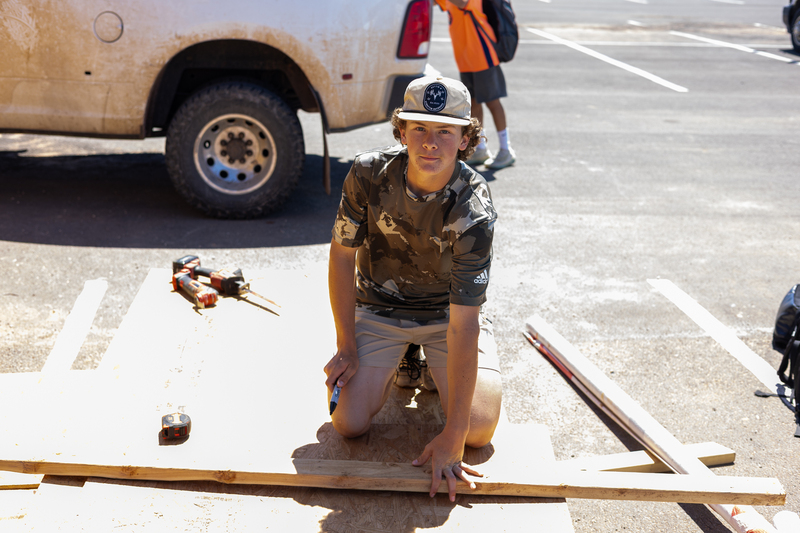
Davis Wylie had experience with woodworking and other building projects, but framing a house that would actually be used gave the work a different purpose. He contributed throughout the build and saw skills he could carry into future repairs, a career in the trades or even a business of his own.
“I feel like I have an actual purpose of building this,” Wylie said. “It’s more to it than making money.”
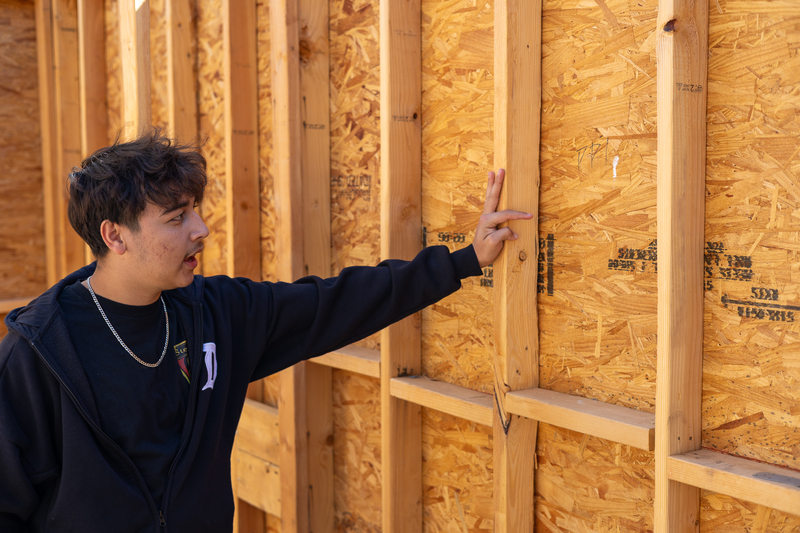 Caden Cortez
Caden Cortez, whose father is an electrical contractor, helped translate the plans onto the home’s bare wooden studs. He marked locations for the electrical panel, outlets, switches and home runs that would connect circuits directly to the breaker box.
Reading a plan accurately, Cortez explained, is only the beginning. Builders also have to anticipate changes and find safe, practical ways to make every system work within the same space.
“We’ve got a great team,” Cortez said, pointing to students who enjoy both construction and electrical work. He believed their combined effort would create a good home for someone who needed it.
Caleb Houston also helped put a student voice to the project’s impact. In coverage by KTXS, Houston said the work “just felt good” because students were building something that could support other people.
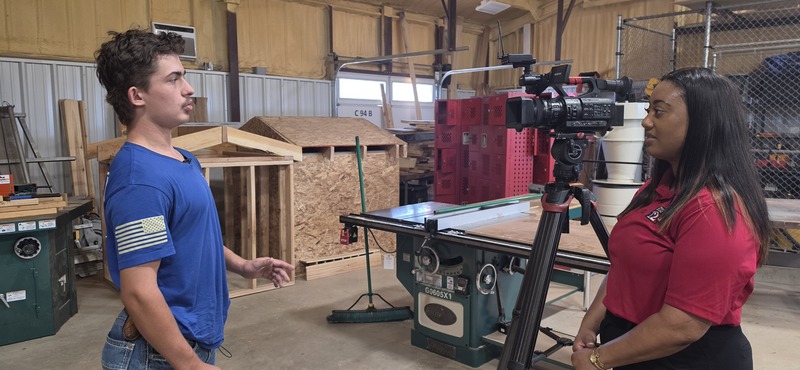 Caleb Houston with KTXS Reporter Kayla Hamlett
Learning how the pieces fit
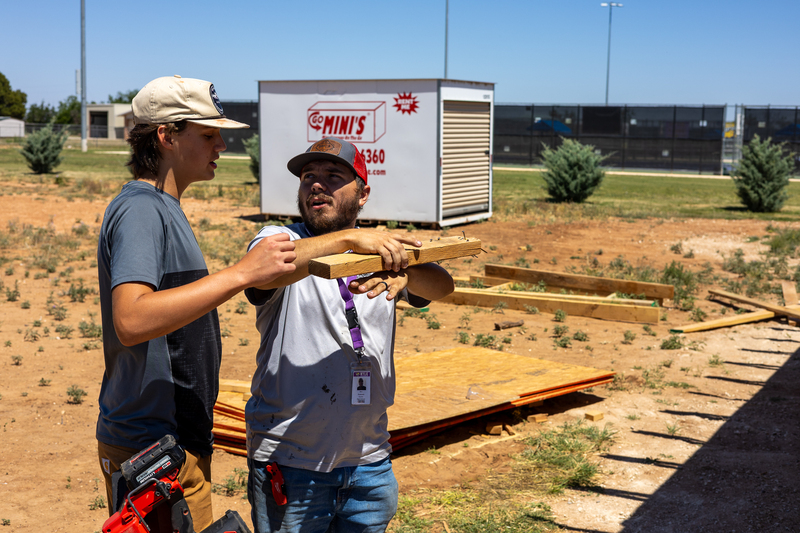 Ben Hudman teaches construction
Hudman saw that sense of purpose take hold as students worked during two class periods each day beginning around spring break. A core group kept returning to the job, measuring, fastening and solving the small problems that arrive with any construction project.
“They really hunkered down and got on it,” Hudman said.
As the walls rose, students learned how closely the different trades depend on one another. Framing had to account for plumbing, electrical work and accessibility. Electrical plans had to match the compact layout. A measurement made by one class could shape the work waiting for another.
The build also revealed the amount of planning hidden inside a finished home. Blocking placed inside a bathroom wall may never be visible to a future guest, but it is essential to the home’s accessibility and function. Wiring eventually disappears behind drywall, yet each circuit, switch and outlet has to be considered long before the wall is closed.
For students interested in construction or electrical work as a career, the project offered experience that felt much closer to a jobsite than a traditional classroom assignment. It also gave Shaffer, Wylie, Cortez, Houston and their classmates different ways to see how their individual contributions became part of the same finished home.
Shaffer’s advice to younger students considering the course is as direct as his hope for the family who will stay in the home: “Don’t hesitate.”
Hudman hopes the students remember more than the technical skills. He wants them to understand that work done well can serve people they may never meet and that their abilities can have a real benefit to society.
From Wylie to its new home
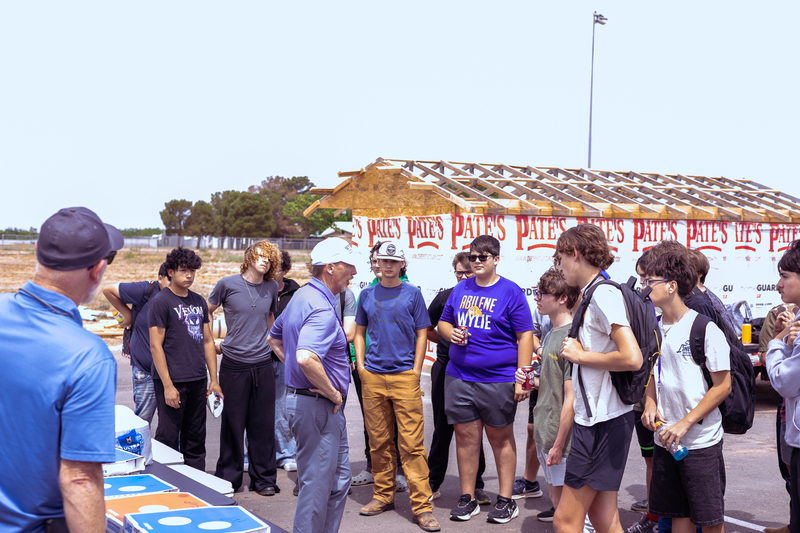
Over the summer, the house made the move from Wylie High School to the Houses for Healing campus at 3065 Hickory Street. Community partners continued the roofing, flooring and other finishing work needed to prepare it for future guests.
The compact home includes a bathroom, kitchen, sleeping area and living space. It may be small by traditional housing standards, but for someone traveling repeatedly for treatment or remaining close to a hospitalized family member, it offers something invaluable: a private place to rest without the added burden of a hotel bill.
Houses for Healing serves people during cancer treatments, lengthy hospital stays and other medical crises. Volunteers connected with each house may also help guests with meals, transportation and everyday needs. That support allows families to focus more of their attention on the person receiving care.
There are already 20 tiny houses in service. The Wylie-built house is part of an expansion expected to bring the community to 30 homes, including new lodging for families navigating neonatal intensive care and transplant treatment.
The project required more than the work of students and teachers. Community sponsors provided materials, while local businesses, ministries and other partners helped move the house and continue the work needed to prepare it for guests. Each group contributed a different piece, much like the trades that worked side by side during the build.
A personal connection
For Wylie Assistant Superintendent Terry Hagler and his wife, Angie, the project carries personal meaning. Their family understands the strain of an extended medical stay and the difference it makes to have lodging close to care.
That experience helped inspire a desire to provide similar support for families coming to Abilene. Hagler, who serves on the Houses for Healing board, helped connect the organization with Wylie’s teachers and students.
For the students, the impact may not be fully visible until a family begins using the home. They may never know the names of every person who rests there or hear every story that unfolds inside it. Still, their work will be present in every wall, outlet and room.
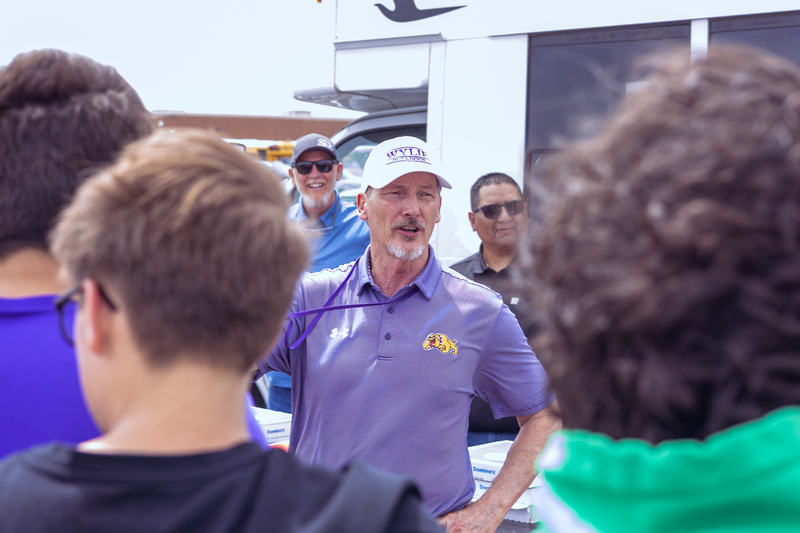 Mr. Terry Hagler
A story that traveled
The students’ work was first highlighted in The Growl, a local magazine serving the Wylie ISD community. The project then reached a regional audience when KTXS reporter Kayla Hamlett interviewed Wylie students and staff about using classroom skills to help families facing medical crises.
The story did not stop in West Texas. Television stations across the country shared it with their audiences, carrying the work of Wylie students from Fargo, North Dakota, to Fort Myers, Florida. A house built one board, nail and wire at a time in Abilene was suddenly showing viewers across the nation what students can accomplish when career training is joined with service.
Read: The feature in The Growl
Watch: KTXS News Story
Watch: How the story traveled across the country
The attention is worth celebrating, but the greater hope is what comes next. Hagler told KTXS that Wylie ISD had committed to building one house each semester. The district hopes future construction and electrical classes will build upon this work, continue developing their skills and help even more families find comfort during difficult seasons.
“Part of the story”
Houses for Healing founder and president Brian Massey hopes the students remember that connection long after the final work is complete. He imagines them driving past the finished home years from now, their own children in the back seat, and pointing toward something they helped build.
“This is just part of the story,” Massey said.
The rest will be written by the families who sleep beneath the roof, gather around the small kitchen and find room to breathe between appointments. It will continue through the volunteers who provide a meal, the partners who maintain the home and the future Wylie students who discover that their skills can meet a need beyond the classroom.
For the Wylie students, the lesson is already standing on the Houses for Healing campus in lumber, wire and nails: what they build with their hands can hold far more than walls.
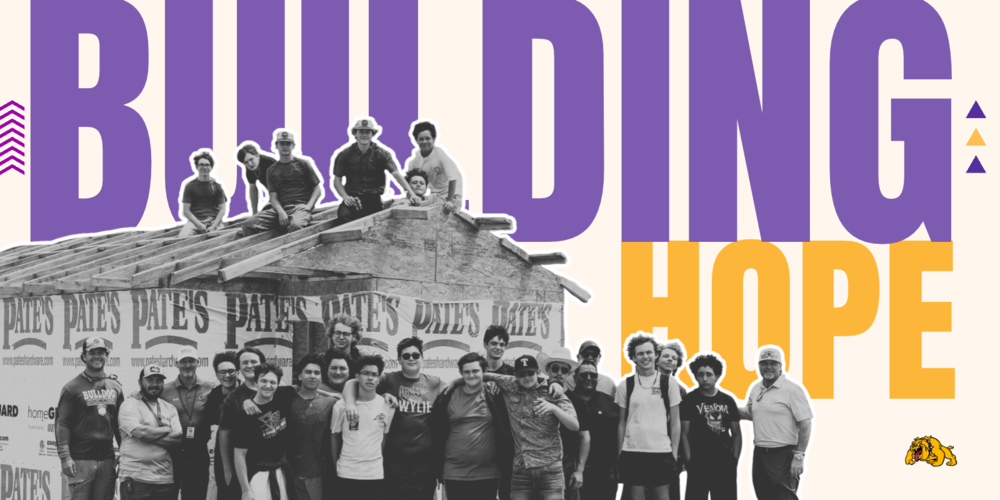
It can hold hope.