
How Wylie works together to support the whole child
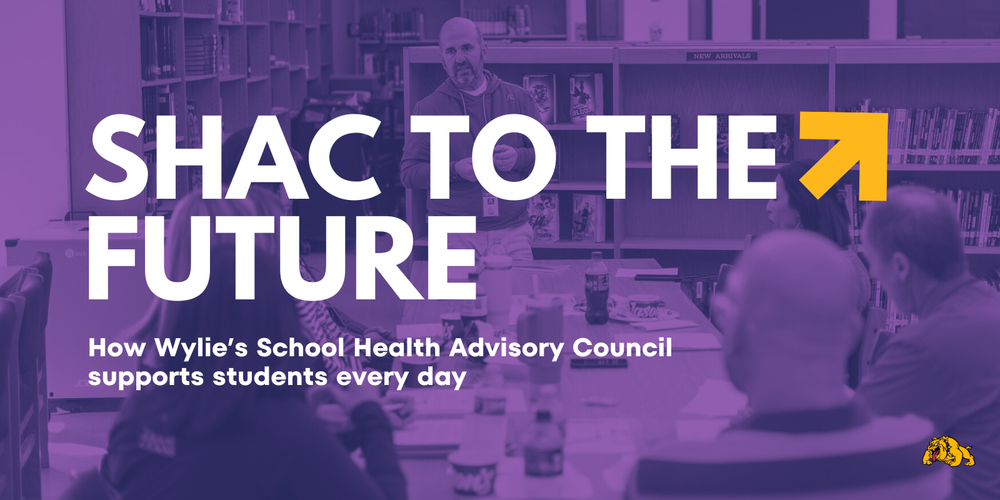
 (Mark Blakely speaking to SHAC members)
On Wednesday afternoon, the School Health Advisory Council didn’t gather in a quiet conference room at the administration building.
They met at the high school.
Instead of simply reviewing reports, members walked the halls and stepped into the spaces where student support happens every single day. It was intentional. If SHAC is going to advise the district on student health, it helps to see it in action.
If you’ve ever heard the term “SHACK” and wondered what it actually means, you’re not alone.
What Is SHAC?
SHAC stands for School Health Advisory Council, and every public school district in Texas is required by state law to have one.
The council’s purpose is to advise the school board and district leadership on coordinated school health. That includes physical education, nutrition, health education curriculum, counseling services, mental health supports, and social services. In Texas, SHAC also plays a role in reviewing and recommending certain health-related curriculum and instructional materials in accordance with state law.
The Texas Department of State Health Services outlines SHAC as part of a broader “whole child” approach — recognizing that academic success and student wellness go hand in hand. A student who feels safe, supported, and healthy is far more likely to thrive in the classroom.
By law, SHAC meetings must be posted publicly at least in advance. Meetings are open to the public, minutes are recorded, and a majority of the members must be parents of students currently enrolled in the district.
In Wylie ISD, that table includes district leaders, licensed counselors, campus support staff, parents, and community partners — each bringing a different lens, but the same shared focus.
Learning About Student Supports — Up Close

This week’s meeting centered on mental health counseling, psychological services, and social support systems available to students.
Assistant Superintendent Terry Hagler, who chairs the committee, explained that SHAC exists to examine the issues that affect students’ overall health — from physical fitness and nutrition guidelines to counseling and social services.
But this meeting wasn’t just discussion.
It was a walk-through.
Rick Sanders, the high school’s Licensed Professional Counselor, outlined the district’s layered system of support. Wylie operates with a multi-tiered model — meaning help is available at different levels depending on a student’s need.
Tier one services are available to all students. These include counselors, academic guidance, and general campus supports.
Tier two services involve more structured support. That’s where programs like Communities In Schools and Mentors Care step in.
Tier three services involve more intensive intervention, including safety planning and clinical-level counseling for students facing significant mental health challenges.
It’s not a one-size-fits-all model.
It’s thoughtful. Coordinated. Collaborative.
And it requires teamwork.
The People Behind the Programs

Mark Blakely, who coordinates Mentors Care at the high school, pairs students with adult mentors from the community. They meet weekly during the school day. Some students have been in the program for over a year.
His lunchroom space is open to any student who needs a safe place to land. It’s a little loud. A little eclectic. But safe. Students who may not feel comfortable anywhere else often find belonging there.
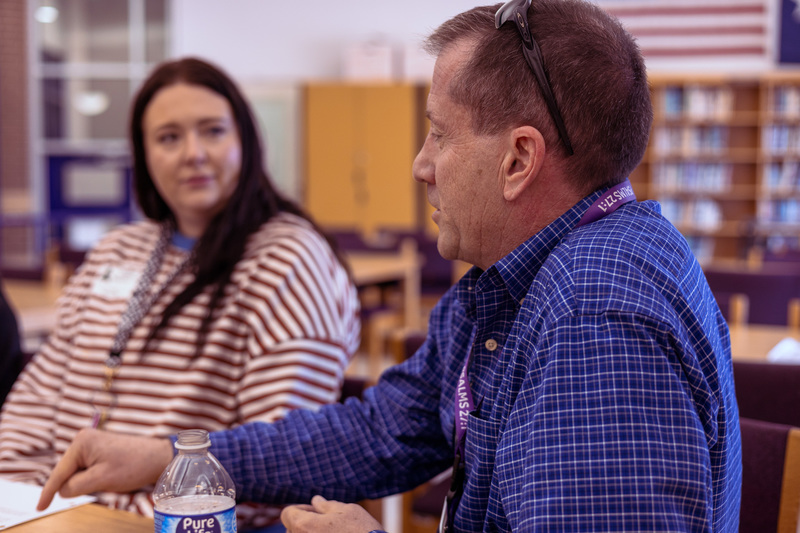
 (Brianna Brewer, right)
The mentors — community members who volunteer their time — are, in his words, the real heroes.
At Wylie West Junior High, Brianna Brewer serves through Communities In Schools. She has over 100 parent consents and actively case-manages dozens of students. She checks grades. She walks students to tutoring. She listens to middle school heartbreak and friend drama. She shows up at games and concerts because sometimes what a student needs most is simply someone who sees them.
Her goal is simple: no student should feel invisible.
At the high school, Nikki Valdez coordinates Communities In Schools efforts focused on mental health awareness and resource connection. She works closely with counselors and campus partners to ensure students are supported without duplicating services. The team even uses shared tracking systems to make sure students are receiving the right level of help — without being overwhelmed.
It’s steady work.
Quiet work.
But it changes lives.
A Chaplaincy Program That Stands Out
Wylie ISD also operates a district chaplaincy program — one of the earliest of its kind in Texas.
Dr. Jay Miller serves as the district chaplain and works with both students and teachers. Wylie now has four chaplains serving five campuses. While some campuses focus primarily on teacher support, the high school chaplain works with both staff and students.
The mission is simple: help people navigate storms.
Sometimes that means talking through grief. Sometimes it’s anxiety. Sometimes it’s a strained parent relationship. Often, it’s just listening.
The program has drawn attention beyond Wylie. District leaders have fielded calls from superintendents across Texas interested in learning how it works. The program has even been referenced in conversations at the national level as a model for how rural and mid-sized districts can bridge mental health gaps.
Inside the building, the impact feels deeply personal. It’s a student learning how to breathe through anxiety instead of walking out of school, a teacher pausing in the hallway for a conversation they didn’t realize they needed, and quiet moments of steady support that help both students and staff make it through hard days.
Why SHAC Matters to Families
So why should families care?
For parent and SHAC co-chair Casey Todd, the answer is personal. She shared during the meeting how Communities In Schools positively impacted her son and household. Having someone on campus who knew his name, listened to him, and walked alongside him mattered more than she can put into words. “I’m very thankful,” she said simply.
SHAC is where transparency meets student well-being. It brings parents, counselors, administrators, and community partners to the same table to talk openly about issues that shape campus life — from nutrition standards and physical education to mental health trends and health curriculum. More than policy discussion, it reflects the district’s commitment to caring for students not just academically, but physically, emotionally, and socially as well.
This week’s meeting ended not with a vote, but with understanding.
Members left having seen the layers of support up close — the safe lunchrooms, the counseling offices, the quiet conversations that often go unseen.
SHAC may be an acronym on paper.
But in Wylie ISD, it’s people.
Parents. Counselors. Mentors. Chaplains. Advocates.
All pulling in the same direction.
Because when we care for the whole child, we strengthen the whole community.
And that’s one more reason it’s great to be a Wylie Bulldog.