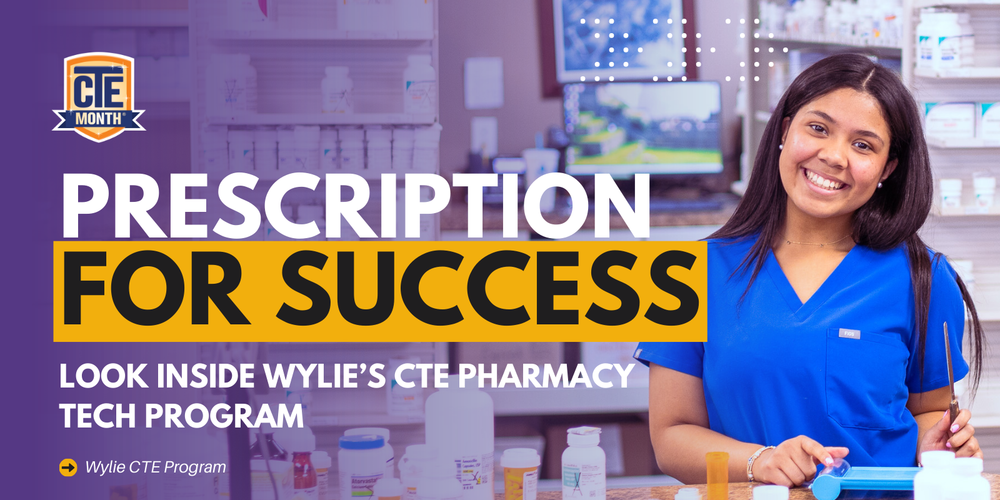
Inside Wylie ISD’s Pharmacy Technician Program, where students learn that every label, every number, and every question matters.
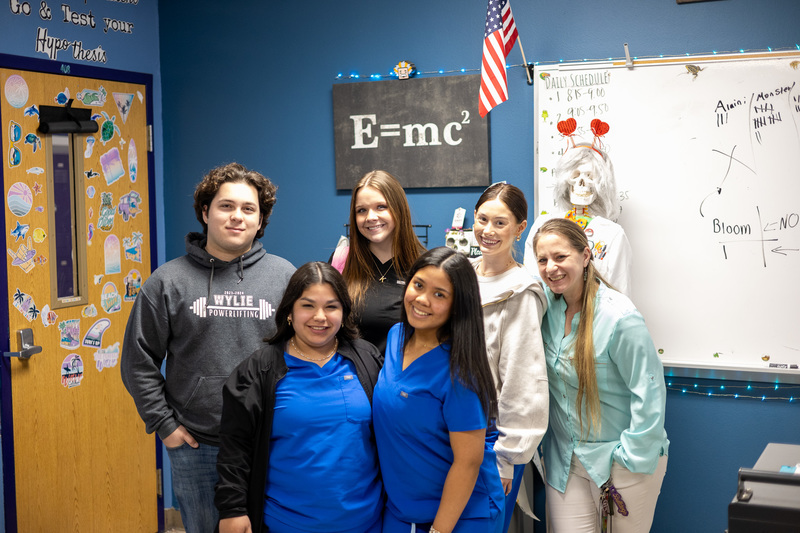 (Mrs. Erin Stuart's Pharmacy Tech Class)
On a Monday in Mrs. Erin Stuart’s classroom, you can almost hear the shift happen.
The bell rings, backpacks hit the floor, and students settle in like any other class. But then the conversation turns to something most adults can’t pronounce on the first try, and the room gets focused fast. This week, it’s six new medications. Next week, six more.
Mrs. Stuart smiles as she says it out loud, like she knows what’s coming next: that moment where somebody quietly mouths the syllables, tries again, and then laughs because… honestly, medication names can feel like they were invented as a prank.
But this isn’t a prank. It’s preparation.
For Wylie ISD Career & Technical Education Month, the Pharmacy Technician program is one of those hidden gems that deserves a brighter spotlight. Led by Mrs. Stuart, students like Ariel Trinidad, Kacy Taillet, Kendell Foreman, and Niah Edwards are learning what happens behind the pharmacy counter. Not just the counting of pills, but the responsibility, the precision, and the people.
Because pharmacy work isn’t just about medicine.
It’s about trust.
A class that feels like a launchpad
Mrs. Stuart describes the goal simply: preparing students to go work in a pharmacy. That’s the destination. But the road there is what makes the program special.
Students apply and are selected carefully, because the work is serious. They’re handling processes tied to medication safety, privacy laws, and professional expectations. Early in the year, students complete steps most teenagers don’t even know exist: applying for a training license, getting fingerprinted, and passing background checks. It’s not to intimidate them. It’s to protect the integrity of the work they’re stepping into.
“It’s a job,” Mrs. Stuart tells them early on. “If you don’t show up to your job, it doesn’t look so good.”
Kacy Taillet puts it more personally. “You definitely need to be self-driven,” she says, because the class isn’t physically exhausting in the way some programs are. It’s mentally demanding. Knowledge-based. It requires the kind of discipline that doesn’t always show up in a gradebook.
And yet, that’s where the growth happens.
The “lab” looks like Smarties, but the learning is real
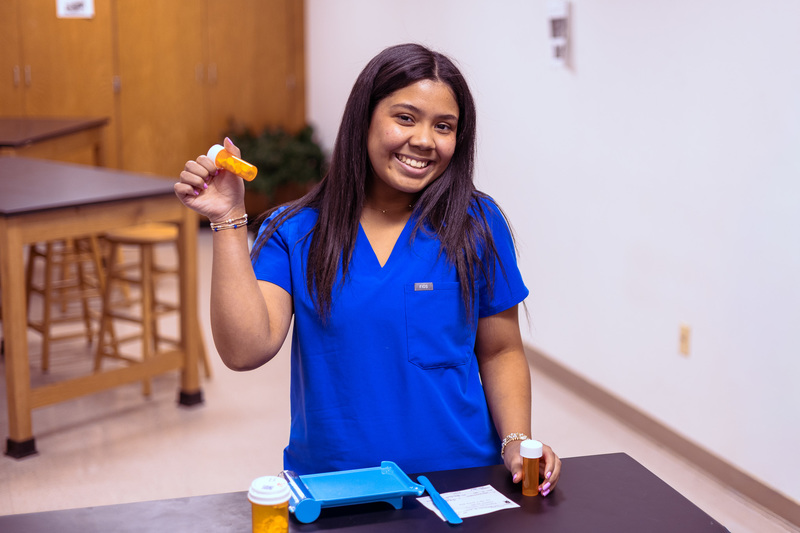
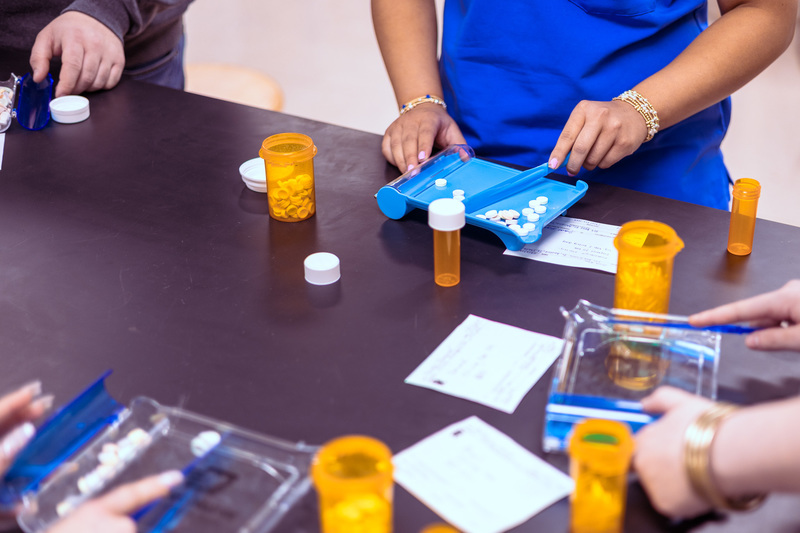
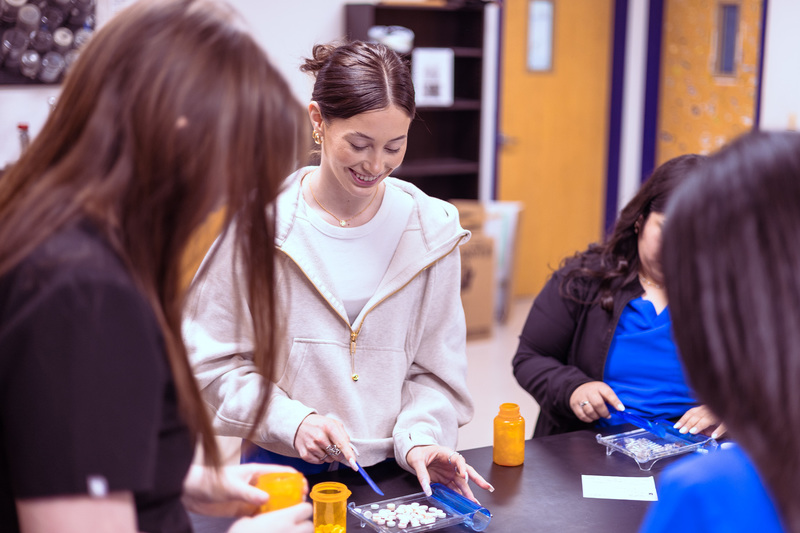 (Kacy Taillet sorting Smarties in class)
At the beginning of the year, students practice hands-on skills in ways that are creative and surprisingly fun, considering what they’re training for.
They learn to count pills using pill-counting trays. They practice with gel capsules filled with crushed Smarties because real medication can’t be used on campus. They learn to read prescriptions. They begin to understand how pharmacy math works and why ratios matter.
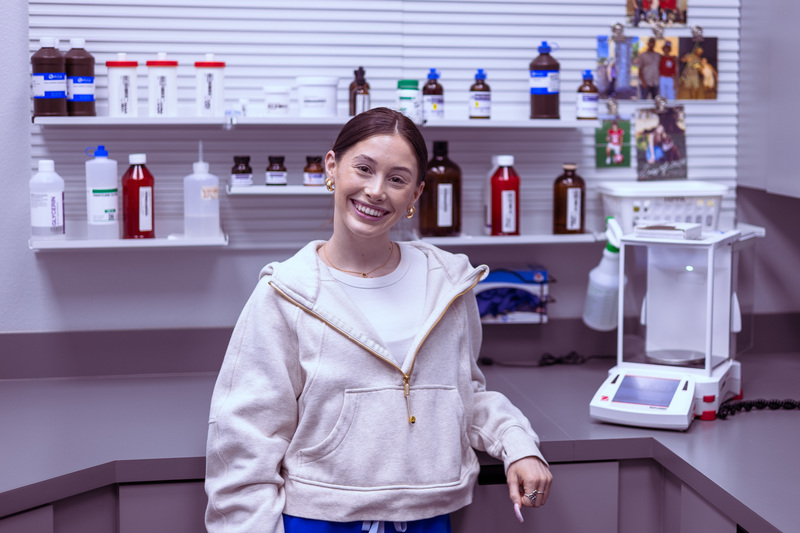
Later, as their knowledge builds, the class moves into compounding practice. Not with prescription creams yet, but with something approachable like making chapstick. The point isn’t the chapstick. The point is learning how to measure, mix, and follow directions exactly, because “close enough” is not a concept pharmacy can afford.
Even on the classroom days, everything is building toward the real-world rotations.
At 12:15, the classroom becomes a set of car keys
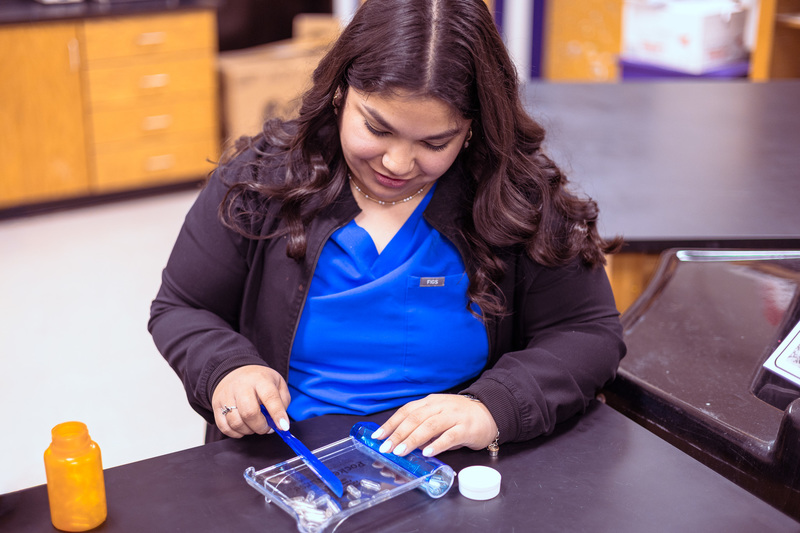 (Ariel Trinidad)
Unlike some programs where students travel together, Pharmacy Tech students transport themselves to their clinical sites. That detail matters because it changes the feel of the day. It’s a quiet step toward adulthood.
At Wylie High School, the schedule sends students out after class. By early afternoon, Ariel is heading one direction. Kendell is heading another. Niah is going straight to her site. Kacy has her own plan and her own pace, and she laughs about how long it takes to get there depending on “how fast I like to drive.”
They’ve got about an hour to an hour and a half at their sites, usually twice a week, working toward the clinical hours required. And in that window, they’re not just watching. They’re doing.
They rotate through multiple pharmacy locations, which means they see the differences from place to place. That variety is part of the brilliance. One site might focus on blister packs. Another might deal more with insurance hurdles. Another might include compounding.
“Each one is different,” Ariel says. “It’s just learning everything different… seeing what stores do what and what don’t.”
That’s the kind of sentence that sounds simple until you realize what it means: she’s learning to adapt, and she’s learning that healthcare is never one-size-fits-all.
Behind the counter: a community partner’s view
Students may be the face of this story, but the program works because local professionals open the door and treat teenagers like future colleagues.
At James McCoy Pharmacy, pharmacist Jason Heuerman helps make that happen.
Heuerman helps coordinate the clinical rotation system that gives students a wide-angle view of the profession. Wylie Pharmacy Tech students don’t just learn one store’s rhythm. They rotate through six different pharmacy locations, which means they see how different teams operate, how workflows change, and how pharmacy can look a little different depending on the setting.
“It’s really cool to see six different versions of retail pharmacy,” Heuerman said. “It’s a really neat experience.”
For the pharmacies, the partnership matters too. It is not just about hosting students. It is about building the future workforce right here at home.
“We like it because it gives us kind of first shot at maybe hiring a potential employee,” Heuerman shared. “We’ve hired a couple of the students that have come out of the program.”
That is one of the quiet wins of CTE. Students gain skills and real experience while local businesses get to invest in people early, train them well, and sometimes welcome them onto the team.
Heuerman also pointed to the advantage students carry when they leave high school already certified. That credential, he said, can give them a real head start as they work their way through college or a long-term healthcare career.
In a field built on accuracy and trust, that kind of early preparation is powerful.
The part the public doesn’t see
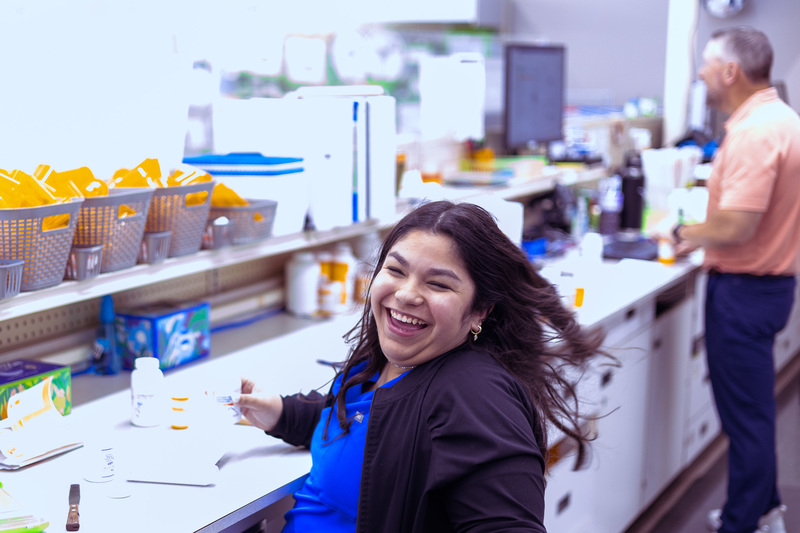
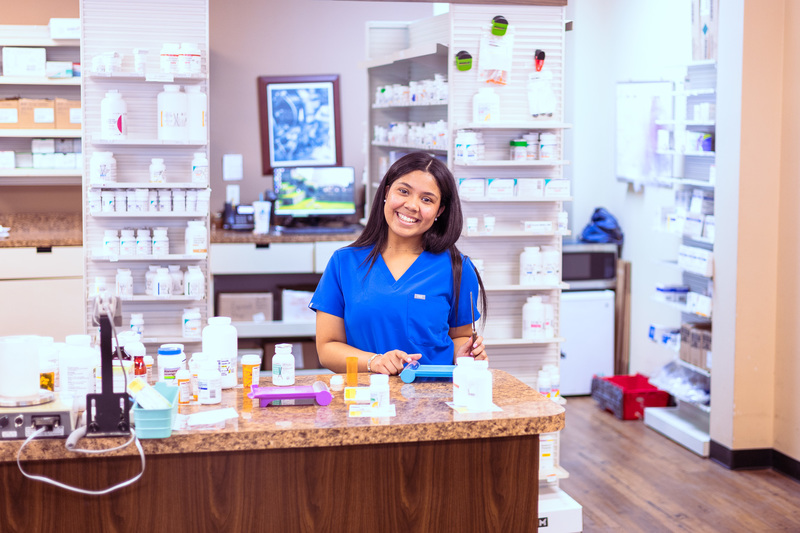
 (Kacy Taillet)
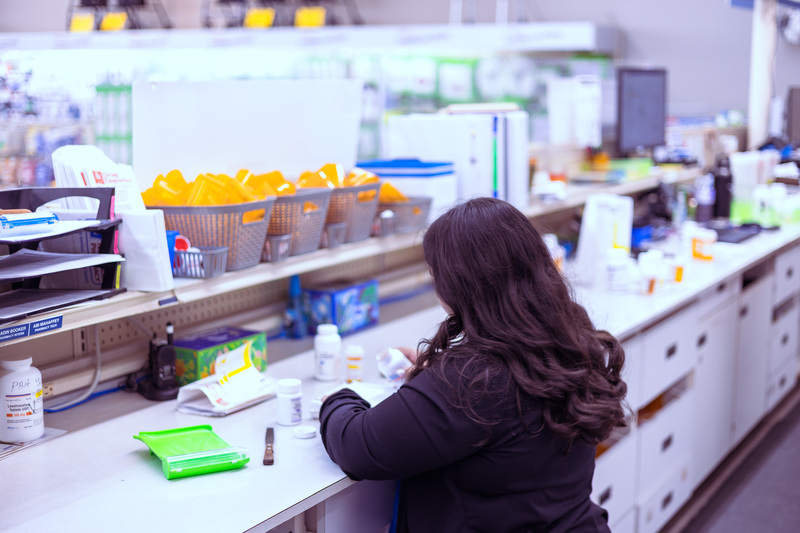
Most of us step up to a pharmacy counter and assume things are calm behind the scenes. The pharmacy tech smiles, types, asks for a date of birth, and hands over a small bag that changes someone’s day.
Ariel wants people to understand what’s really happening.
“They’re busy,” she says. “They have a lot to do. People should be more appreciative.”
Kacy agrees, saying this program has made her more patient in everyday life.
“There’s a lot of things you don’t think about,” she explains. “It definitely gave me more patience with pharmacies… how many prescriptions they fill a day, how insurance works.”
Insurance, it turns out, is one of the biggest eye-openers for students. Kacy describes situations where claims won’t go through and the pharmacy has to help someone figure out how to get what they need without paying thousands of dollars.
That’s not just paperwork. That’s someone’s real life on the other side of the counter.
And it’s exactly why Mrs. Stuart emphasizes professionalism. Accuracy matters. Privacy matters. The process matters.
Because people matter.
Learning 200 medications, one week at a time
Every Monday, students get six new medications to learn. Six brand names. Six generic names. What they do. Why they’re prescribed. What to watch for. How they interact. How they affect the body.
By the end, students have studied a list of 200 commonly prescribed medications, and that alone could make a student’s brain feel full by October.
Kacy remembers the first week clearly.
“When we started learning the medicine, I was like, ‘There’s no way. There’s absolutely no way I’m learning 200.’ I was so scared.”
Then the shift happened. Repetition turned into familiarity. Classroom knowledge started showing up on bottles at clinical sites. Suddenly the words had meaning.
“Once we got in the pharmacies,” she says, “it was so much easier to understand that.”
Mrs. Stuart sees this moment every year, too, the point where students realize they’re past the halfway mark and can finally see the finish line.
“There’s the light at the end of the tunnel,” she says with a smile, as if she’s been waiting for them to discover it.
“You have to slow down”
In a world that celebrates speed, pharmacy teaches something else.
“You really have to slow down,” Kacy says, “which is really hard for me.”
That’s not a small statement. It’s a life skill. In pharmacy, slowing down isn’t laziness. It’s safety. It’s making sure every step matches what’s written, what’s intended, and what’s best for the person receiving it.
Kacy also talks about how hard it can be to keep a controlled environment. There are “a lot of steps in the process,” she says, and everyone has to do their part for the flow to work.
That’s what makes Pharmacy Tech different from what people imagine. It’s not a quiet job with neat shelves. It’s a system. A chain. A shared responsibility.
And Wylie students are learning to be a strong link.
Why these students chose this path
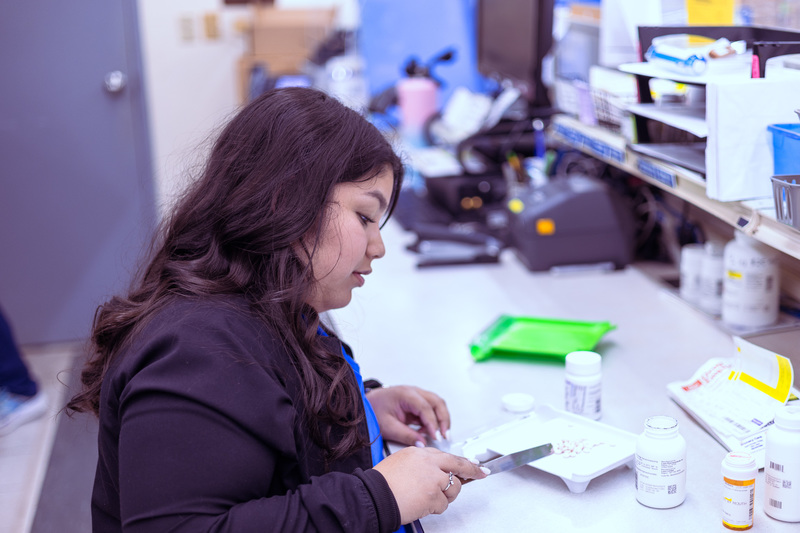 (Ariel Trinidad doing clinical at Drug Emporium)
What makes this program shine is that students aren’t here by accident. Most of them are already thinking about their future, and they’re using this class as a head start.
Ariel Trinidad says she chose Pharmacy Tech because she already knows what she wants to do someday: pediatric oncology.
“I thought it would be a good way to know the drugs and get a little head ahead for college,” she says.
She also works at Hendrick as an intern, following PCTs and CNAs and helping where needed. She sees healthcare up close, and she’s building the communication skills that matter in every medical setting.
Kacy’s story starts with an injury.
When she was younger, she needed physical therapy after surgery, and that experience sparked her interest in medicine. She planned ahead from freshman year, taking prerequisites and building toward a practicum. When it came time to choose, she picked pharmacy because she wanted to understand how medications help the body, and she knew that knowledge would follow her into college and beyond.
She also has a specific heart for geriatrics and hospice. At her site, she’s seen what pharmacy means during some of the hardest seasons families walk through.
“If you have the heart to help people,” she says, “it makes it really easy to be intrigued.”
Kendell Foreman and Niah Edwards represent another strength of the program: the way students step into real responsibility while still being teenagers. They’re navigating schedules, showing up on time, learning from professionals, and building confidence in environments that require maturity. Niah calls the opportunity a “huge stepping stone,” especially for students who want options after graduation.
“They have a job waiting for them,” she says, and she’s not exaggerating. This pathway can lead directly into the workforce while still supporting college and long-term medical goals.
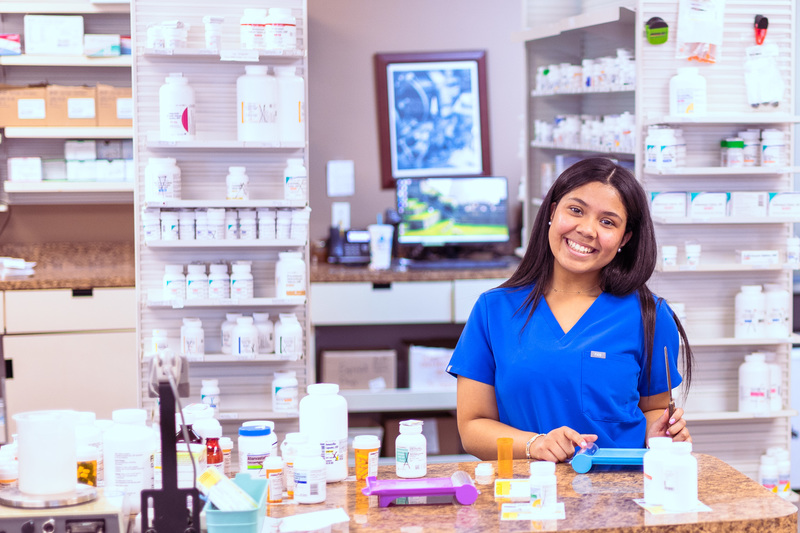 (Niah Edwards at James McCoy South Pharmacy)
A classroom that feels like a team
One of the most surprising parts of this program isn’t the medicine list. It’s the culture.
Kacy talks about how the class is collaborative, how students help each other learn, and how relationships form between people who might not have crossed paths otherwise.
“Building relationships with kids that you never thought you could,” she says, matters more than she expected. They share study materials, quiz each other, and compare experiences from different pharmacy sites.
Mrs. Stuart sees it too. Students come back from rotations and ask each other what worked, what to expect, and how to handle the day-to-day reality of professional environments. That peer learning becomes part of the curriculum, even if it’s not written in the lesson plan.
The kind of advantage you can’t fake
Pharmacy Tech students don’t just earn knowledge. They gain credibility.
The program introduces them to professional expectations early: confidentiality, precision, and the understanding that mistakes have consequences. That’s why the class is selective. That’s why the pace is serious.
And it’s why students leave with a real advantage.
Some students may head straight into a pharmacy job after graduation. Others will carry this foundation into nursing, pre-med, allied health, or other medical fields where pharmacology can be one of the toughest hurdles. Mrs. Stuart has heard it from colleagues in nursing: students with prior pharmacology exposure often feel more confident and prepared.
But beyond the resume boost and the clinical hours, there’s something else happening here.
Students are learning what it feels like to be needed. To be trusted. To be part of a system that helps people live healthier lives.
And for a teenager, that changes the way you see your own potential.
Why it matters for Wylie
CTE Month is about celebrating programs that don’t just teach content, but create pathways. Wylie’s Pharmacy Technician program does exactly that. It gives students a head start in a field that always needs strong, careful, compassionate professionals.
In Mrs. Stuart’s classroom, success isn’t measured only by test scores, though there is a certification test waiting at the end of the year. Success is also measured by the student who learns to slow down. The student who learns to ask questions. The student who begins to understand that every label represents a person and a story.
Ariel says it best when she talks about her proud moments, not as a grade, but as an experience.
“Filling medications,” she says, “talking to the people… knowing that I get to help them through a tough time.”
That’s the heart of the program.
And it’s the reason our community should know this exists, cheer it on, and encourage future Bulldogs to consider it.
Because Wylie isn’t just graduating students.
Wylie is building professionals.
It’s great to be a Wylie Bulldog.